Hone Health, Men's Health + TRT Membership
The mass-market men's telehealth platform that pulled TRT out of the urology clinic and into the iPhone.
Lifespan Vault earns an affiliate commission when you buy through links on this page, at no extra cost to you. It does not change our rankings or our verdicts.
QUICK VERDICT
The men's telehealth platform that pulled TRT out of the urology clinic and into the iPhone - and the one most buyers compare everything else against.
Price: $65 to $155/mo · Verified: 2026-07-09 · Editor score: 8.4/10 (how we rank)
The men's telehealth platform that pulled TRT out of the urology clinic and into the iPhone - and the one most buyers compare everything else against.
Hone Health is what most buyers actually mean when they Google "online TRT." Founded 2020, scaled hard through 2022-2024 paid acquisition, and built the playbook every newer entrant is now copying: at-home blood draw, telehealth visit, prescription if labs and symptoms align, ongoing monitoring through a clean app.
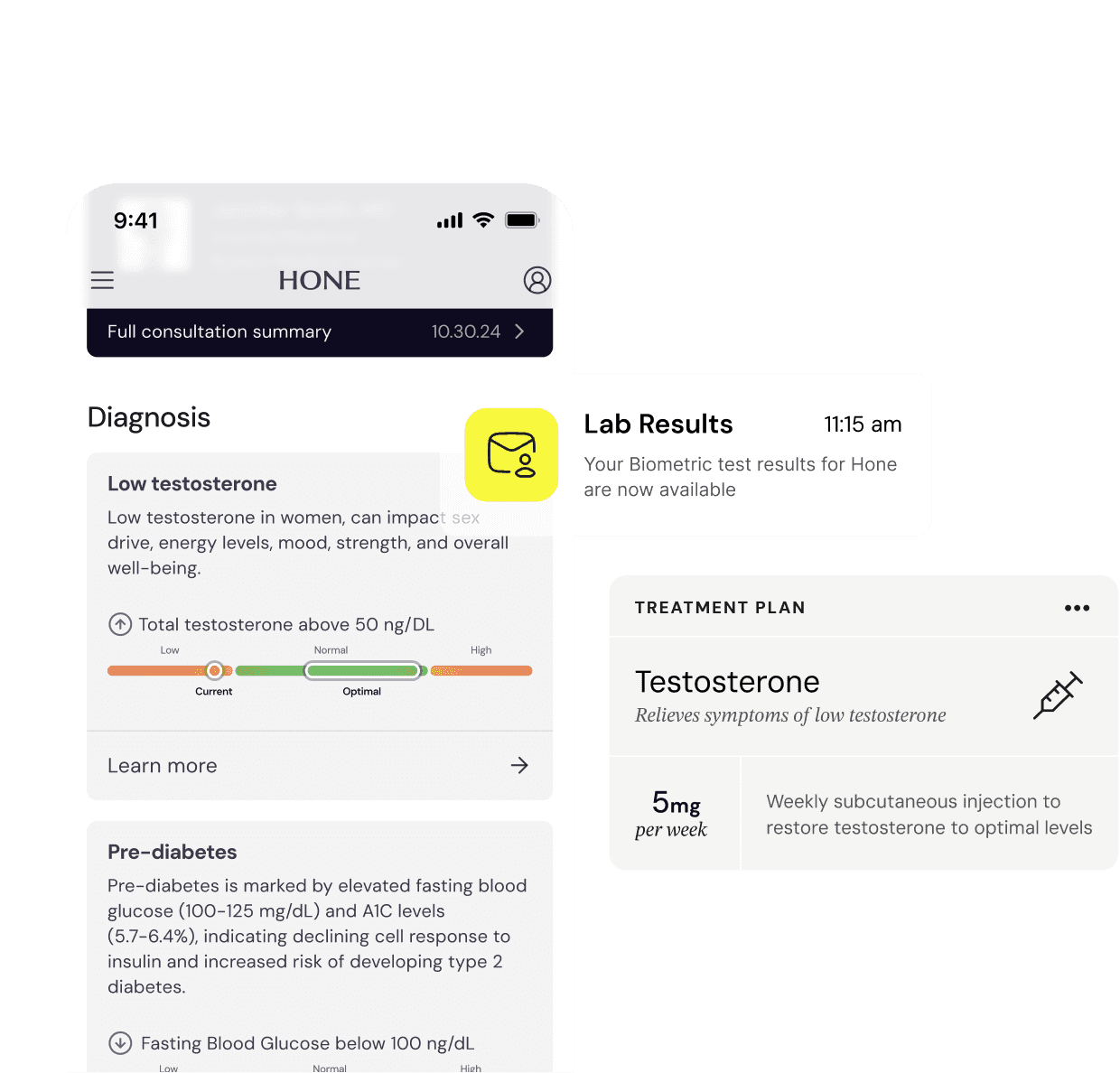
What it tracks well: testosterone (total + free), estradiol, SHBG, and the standard supporting markers. Members can compare panels over time, see protocol adjustments alongside lab movement, and message clinicians without re-explaining their history every visit. It's the cleanest UX in the category and the lowest-friction entry point for buyers who don't want to navigate a urology referral.
Where it wins: scale and price discipline. The $65 assessment plus $129-149/mo membership lands well under what most buyers pay for in-person TRT after copays, lab fees, and follow-up visits. The app handles refills, dose adjustments, and recurring labs without requiring a new appointment each cycle.
Where it loses: depth and customization. Marek Health and Maximus both go further on protocol complexity (HCG, anastrozole, enclomiphene combos), and clinic-based providers like Defy Medical or Cenegenics will run far broader peptide and ancillary protocols Hone won't prescribe. Hone is deliberately mass-market - that's the strength and the ceiling.
The other consideration is state availability. Telehealth TRT regulations vary widely, and Hone's footprint shifts as state-level rules evolve. Buyers in restrictive states should confirm coverage before committing.
Who should buy: men 30-55 with mid-range symptomatic testosterone who want a clean, well-supported entry to monitored TRT without pre-existing clinic relationships. Who shouldn't: anyone wanting complex multi-medication protocols, anyone in a state with restricted telehealth scope, or anyone who already has an in-network endocrinologist running the same labs for less out-of-pocket.
Men 30-55 with mid-range symptomatic testosterone who want the cleanest mainstream entry into monitored TRT - no urology referral, no in-person visit, app-driven protocol management.
You want complex multi-drug protocols (Marek or Maximus go deeper), you live in a restricted-telehealth state, or you already have an in-network endocrinologist running comparable labs.
Pros
- Lowest-friction entry into monitored TRT - at-home draw, telehealth visit, prescription if eligible
- Cleanest app UX in the category - protocol changes track alongside lab movement over time
- Sharp pricing - $65 assessment, $129-149/mo membership undercuts most clinic-based TRT
- Broadest state availability among consumer TRT telehealth platforms
- Membership covers ongoing labs, refills, and clinician messaging without per-visit fees
- Strong consumer brand recognition - easiest platform to recommend to TRT-curious friends
- No prior endocrinologist or urology relationship required
- Consistent panel set makes year-over-year tracking straightforward
- Mobile-first refill and dose-adjustment workflow handles most member needs without phone calls
Cons
- Mass-market protocol scope - won't run aggressive HCG/anastrozole/peptide stacks (Marek and Maximus do)
- State-by-state telehealth scope varies and changes - confirm coverage before committing
- Less clinical customization than Defy Medical, Cenegenics, or in-person endocrinology
- Pricing tier separates medication cost from membership - total monthly cost can exceed expectations
- Limited support for women's HRT and broader hormone optimization use cases
- Heavy paid-acquisition model - review skew toward early-funnel buyers vs long-term members
Specifications
Most often compared with
Where this fits
Hone Health Men's Health + TRT Membership cross-shops across several editorial surfaces on this site: the full brand catalog, the buyer-intent tags this item carries, the price band it qualifies for and the in-depth guides for its category.
Hone Health Men's Health + TRT Membership - buyer FAQ
Hone Health vs Marek Health vs Maximus - which TRT platform?
Hone is the mass-market entry: cleanest app, broadest state coverage, sharpest pricing ($129-149/mo + medication). Marek goes deeper on protocol customization (HCG, anastrozole, peptide ancillaries) for buyers with established TRT experience. Maximus is the most aggressive on dose flexibility and runs HCG/enclomiphene combinations. If you're TRT-curious and want a clean entry, Hone. If you have specific protocol needs Hone won't prescribe, Marek or Maximus.
Is Hone's TRT actually monitored?
Yes - the $129-149/mo membership includes ongoing labs (every 3-6 months), telehealth check-ins with the prescribing clinician, and protocol adjustments based on lab movement. Most members test at month 1, month 3, then every 6 months thereafter. The app tracks lab trends across years so dose adjustments are data-driven, not symptom-only.
How much does the medication cost?
Membership covers labs + clinician access but medication is billed separately. Testosterone cypionate (the most common prescription) runs $30-120/month depending on dose, pharmacy, and whether it ships through compounding or commercial pharmacy. Total monthly cost (membership + meds) usually lands $160-270 for standard protocols.
Will Hone prescribe TRT if my labs are borderline?
They'll prescribe based on combined lab + symptom criteria - low-normal testosterone + symptomatic presentation (fatigue, low libido, mood issues) typically qualifies. Hard cutoffs vary by state and by clinician within Hone's prescriber pool. The assessment process is consultative; it's not a guaranteed prescription. If lab values are well within normal range with no symptoms, expect a "not indicated" response.
What states does Hone operate in?
Most US states, but coverage shifts as state telehealth regulations evolve. Particularly restrictive states (and the products available within them) change quarterly. Check current state availability on honehealth.com before ordering the assessment - the $65 assessment is non-refundable if your state isn't covered for ongoing TRT.