Lifespan Vault earns an affiliate commission when you buy through links on this page, at no extra cost to you. It does not change our rankings or our verdicts. As an Amazon Associate, Lifespan Vault earns from qualifying purchases.
QUICK VERDICT
The athlete's watch - 14-day battery, GPS that actually works, and training metrics Apple still can't touch.
Price: $999 to $1,199 (brand list price; see the live price on Amazon) · Verified: 2026-07-09
The athlete's watch - 14-day battery, GPS that actually works, and training metrics Apple still can't touch.
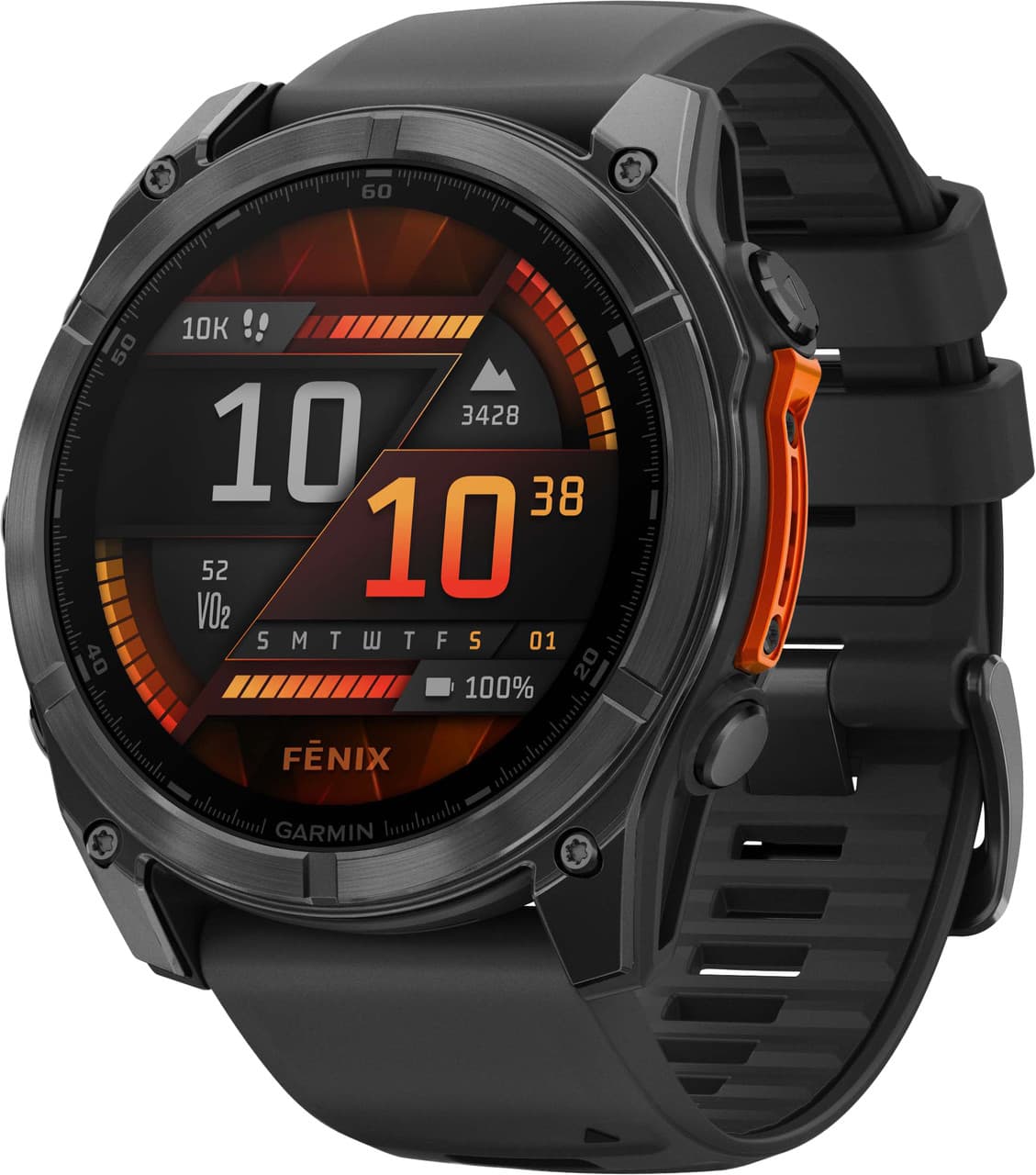
Garmin built Fenix 8 for the buyer who treats their watch as instrumentation, not jewelry. The result is the most capable training watch you can buy in 2026, and one of the few wearables that respects your time enough to last 2 weeks between charges.
What Garmin does that nobody else matches: training load tracking that actually predicts injury risk, multi-band GPS that holds signal under tree cover and in cities, native running power without a foot pod, and a depth of sport profiles (over 100) that turns the watch into a real coach for cyclists, runners, swimmers, and trail athletes.
What it doesn't do: notifications and apps as elegantly as Apple, sleep tracking as accurately as Oura, or strain coaching as opinionated as Whoop. It's the device for people whose primary identity is "athlete" - not "person who occasionally trains."
Endurance athletes, ultra-runners, triathletes, and anyone who needs 2-week battery + serious GPS + training-load science.
You want a smartwatch (go Apple Ultra), you want a passive sleep tracker (go Oura), or you want a coaching strain band (go Whoop).
Specifications
Most often compared with
Kit it out
Accessory links are affiliate links and do not influence our rankings.
Where this fits
Garmin Fenix 8 cross-shops across several editorial surfaces on this site: the full brand catalog and the in-depth guides for its category.
Garmin Fenix 8 - buyer FAQ
Garmin Fenix 8 vs Apple Watch Ultra 2 - which one?
Garmin is the serious-athlete watch with 2-week battery, training-load + recovery metrics, GPS depth, and ruggedness Apple doesn't match. Apple is the general-purpose smartwatch with iOS integration, notifications, payments, and respectable health tracking at 36-hour battery. For triathletes / endurance athletes, Garmin. For everyday wear + iOS lifestyle, Apple.
Is the 2-week battery real?
Yes in smartwatch mode (notifications + step tracking + occasional GPS). Heavy GPS use (long runs, expeditions) cuts to 25-60 hours depending on settings. Solar variants extend further in sunny conditions. The 14-day spec is the realistic typical use for most athletes; heavy users see 5-8 days, very light users see 18-21 days.
What's the training-load model actually do?
Garmin's Training Status algorithm tracks 7-day rolling load + 28-day baseline and flags whether you're Productive, Maintaining, Recovery, Overreaching, etc. The recommendations are evidence-based (based on training-stress score research from Joe Friel and others). For athletes optimizing performance progression, this is the actual reason to buy a Fenix over Apple.
Garmin Fenix 8
$999 to $1,199 (brand list price; see the live price on Amazon) · Verified 2026-07-09
Shop Garmin →