Lifespan Vault earns an affiliate commission when you buy through links on this page, at no extra cost to you. It does not change our rankings or our verdicts. As an Amazon Associate, Lifespan Vault earns from qualifying purchases.
QUICK VERDICT
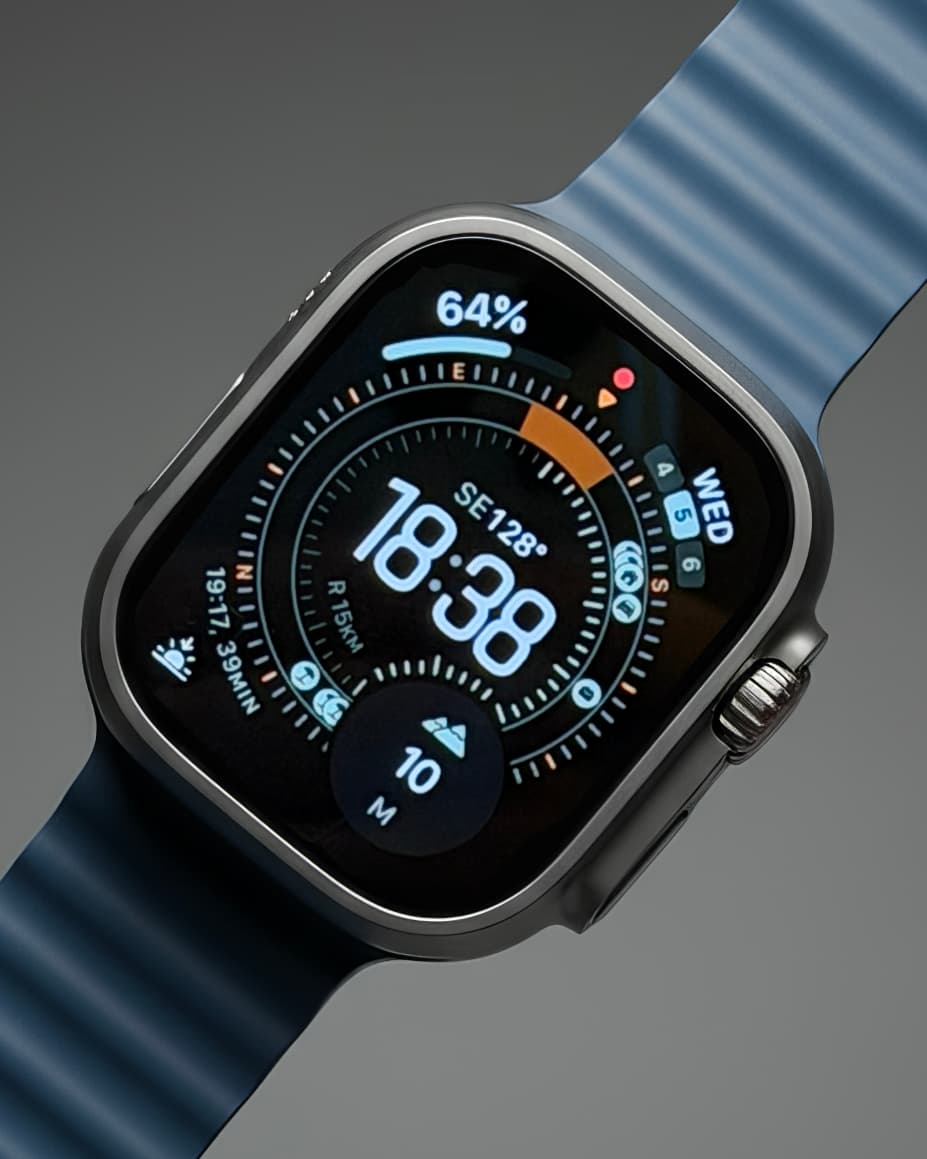
Apple's biggest, most metric-rich watch - and with Ultra 3, the one that works where your phone does not.
Price: $782 to $879 (brand list price; see the live price on Amazon) · Verified: 2026-08-28
Apple's biggest, most metric-rich watch - and with Ultra 3, the one that works where your phone does not.
For years the longevity-and-biohacker crowd treated Apple Watch as too consumer-y to take seriously. The Ultra line closed the gap, and Ultra 3 adds the feature that changes who it is for: satellite.
Messages, Find My and Emergency SOS now work via satellite when there is no cellular and no Wi-Fi, free for two years with activation per Apple. For trail runners, backcountry skiers and open-water swimmers, that turns the watch from a tracker into a safety device. Around it: the S10 chip, 5G, a 2000-nit wide-angle OLED display readable in full sun, hypertension notifications, and a 42-hour battery on Apple's own test cycle.
The sensor stack stays competitive: ECG, blood oxygen, skin temperature, fall and crash detection, real running power. What tilts the buying decision: deep iOS integration, a screen and notifications a ring cannot match, and one device for fitness, comms, payments and health tracking. What pushes against it: still wrist-form, still charges far more often than a Garmin, and Oura and Ultrahuman win on pure passive longevity tracking.
Buyers in the Apple ecosystem who want one device for fitness, notifications, payments, and credible health tracking.
You're Android, you want pure passive tracking (go ring), or you already wear a dedicated fitness watch (Garmin/Whoop).
Specifications
Most often compared with
Featured in these curated stacks
We’ve included this product in 1 editorial bundle - groupings of 4-7 items that work as a system.
Kit it out
Accessory links are affiliate links and do not influence our rankings.
Where this fits
Apple Watch Ultra 3 cross-shops across several editorial surfaces on this site: the full brand catalog, the price band it qualifies for, the execution playbooks that use it and the in-depth guides for its category.
Apple Watch Ultra 3 - buyer FAQ
Apple Watch Ultra 3 vs Garmin Fenix 8 - which one?
Apple Watch wins for the buyer who lives in iOS and wants one device for notifications + payments + fitness + health. Garmin wins for athletes who need 2-week battery life, the deepest training-load + recovery metrics, and rugged outdoor durability. Apple is general-purpose with respectable health tracking; Garmin is the athlete's tool.
Is Apple Watch Ultra 3 actually serious for longevity tracking?
Yes, as the one-device pick. ECG, SpO2, skin temperature, fall and crash detection, running power, and new hypertension notifications. Sleep tracking is usable but still will not beat Oura on staging. For longevity-pro buyers it is a credible secondary device alongside a ring; for general-fitness buyers it is the right single device, and the satellite messaging makes it the safety pick for anyone training out of coverage.
How long does the battery last in practice?
Apple quotes 42 hours for Ultra 3 on its published test cycle, which includes sleep tracking and hours of cellular use. Heavy GPS during long workouts cuts that meaningfully. Most users charge during the morning shower routine. If you want 7-plus-day battery without compromise, Garmin Fenix 8 is the right answer.
Apple Watch Ultra 3
$782 to $879 (brand list price; see the live price on Amazon) · Verified 2026-08-28
Shop Apple →