Doulton British Berkefeld Gravity System
The 200-year-old ceramic filtration counter-thesis to reverse osmosis.
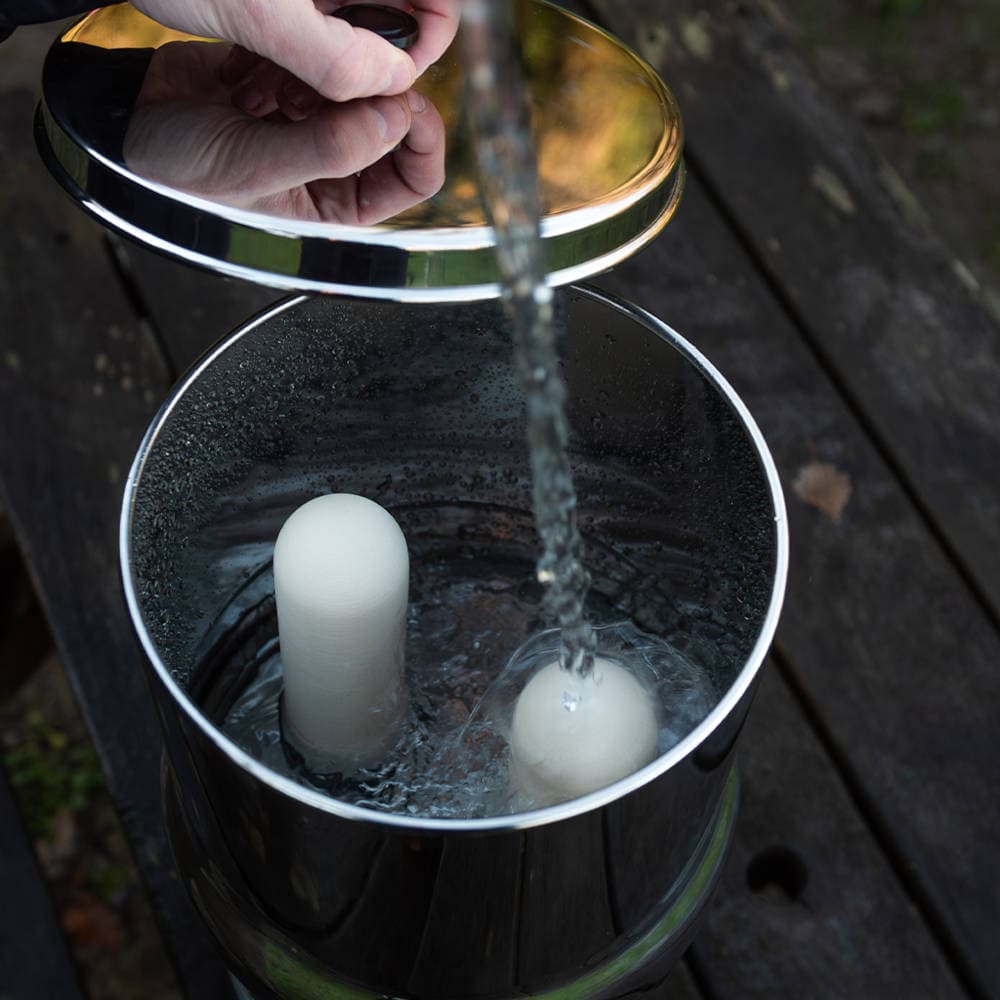
The third path in the longevity-water debate: ceramic filtration that keeps the minerals reverse osmosis strips out.
Most longevity-water arguments collapse into a two-side war — reverse osmosis (which strips everything, including beneficial minerals that you then have to re-supplement) versus structured/hydrogen water (which is mostly marketing). The third path is ceramic filtration, and Doulton has been making it since 1826.
The British Berkefeld gravity system is the flagship. Two stacked stainless steel chambers, a set of Ultra Sterasyl ceramic candles in the upper chamber, no electricity, no plumbing, no pressure tank. You pour tap water in the top, gravity does the rest, and what comes out the bottom has lead, PFAS, chlorine, chloramines, fluoride (with the optional fluoride-reducing candles), bacteria (>99.99% removal), cysts, sediment, and microplastics filtered out — while magnesium, calcium, bicarbonates, and trace minerals pass through untouched.
The positioning matters because the bias in the longevity community is currently against RO. Multiple longevity researchers (Cronin, Sinclair, and Attia have all touched this) point out that long-term consumption of mineral-depleted RO water correlates with cardiovascular and bone mineralization concerns, and RO drinkers are increasingly stacking remineralization filters or re-adding Mg drops. Doulton just skips that step.
The other reason to look at gravity-fed: it works in a power outage, in a rental where you can't plumb under-sink, and in a travel apartment where you don't want to leave hardware behind. Two ceramic candles last about a year of normal household use, which is roughly the cost economics of a mid-tier RO replacement schedule once you factor in remineralization cartridges.
Renters who can't plumb under-sink, buyers skeptical of RO mineral stripping, families wanting a redundant power-off-resilient system, anyone outside the US where municipal water has heavy chlorination but acceptable mineral content.
Your tap water has tested high for nitrates, total dissolved solids over 500 ppm, or persistent heavy-metal contamination above EPA action levels — those scenarios actually warrant RO, not ceramic.
Specifications
Most often compared with
Doulton British Berkefeld Stainless Steel Gravity + Ultra Sterasyl Ceramic Filters - buyer FAQ
How is ceramic filtration different from reverse osmosis?
RO forces water through a membrane with pore size around 0.0001 microns, which removes essentially everything — including beneficial minerals like magnesium and calcium. Ceramic filtration uses a porous ceramic shell (pore size ~0.5-0.9 microns) that physically blocks particles, bacteria, cysts, and contaminants, while the activated-carbon core inside the candle adsorbs chlorine, PFAS, and heavy metals. Dissolved minerals pass through because they're smaller than the pore size and not chemically adsorbed.
Why does mineral retention matter for longevity?
Long-term consumption of demineralized water has been linked in WHO reports to lower magnesium intake and increased cardiovascular risk. RO drinkers either accept this or run a remineralization filter (add $80-200 to the cost) or remember to take Mg supplements daily. The Doulton ceramic system bypasses the problem by leaving the dissolved mineral content largely unchanged.
How long does a ceramic candle last and what does replacement cost?
Ultra Sterasyl candles last about 1,500 gallons or 6 months of normal household use, whichever comes first. Replacement candles run roughly $45-60 each. A standard system uses 2 candles, so annualized cartridge cost is ~$180-240/year — comparable to a mid-tier RO system once you factor in pre-filter and post-filter replacement.
Will this remove fluoride?
The standard Ultra Sterasyl does not significantly reduce fluoride. Doulton sells an optional fluoride-reducing candle (typically labeled Fluoride/Arsenic Reduction) that uses bone char or activated alumina to bind fluoride. Specify if fluoride is a concern at purchase.
Does it work in a power outage or off-grid?
Yes — gravity is the only mechanism. This is the main edge over any RO system, which requires water pressure (and typically a small electric pump or storage tank). Doulton gravity systems are commonly used in emergency preparedness, RV travel, off-grid cabins, and rentals.
Doulton British Berkefeld Gravity System
$200–$350 · Verified 2026-05-11
Get Yours at Doulton →