Lifespan Vault earns an affiliate commission when you buy through links on this page, at no extra cost to you. It does not change our rankings or our verdicts.
Cold plunge temperature is one of those topics where the answer everyone gives ("colder is better") is wrong, and the actual answer depends on what you're trying to accomplish.
Here's the editor's framework after watching dozens of buyers calibrate over the past year.
The dose-response math
Cold-water immersion research generally treats temperature × duration as the relevant dose. Roughly: 50°F for 6 minutes ≈ 39°F for 2 minutes ≈ 33°F for 1 minute, in terms of the cardiovascular and norepinephrine response.
That means there's no single "right" temperature. The right temperature depends on (a) what you can tolerate without sympathetic overload, and (b) how much time you actually have.
The popular Huberman protocol
The widely-cited Huberman framework targets ~50-55°F for 11 minutes per week distributed across 2-4 sessions. That's the "sustainable habit" temperature - cold enough to produce the dopamine spike and norepinephrine response, warm enough that you can stay in for the full 3-5 minute target without willpower being the constraint.
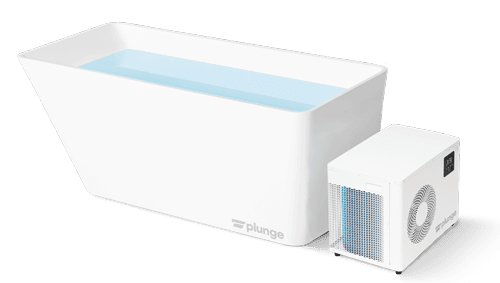
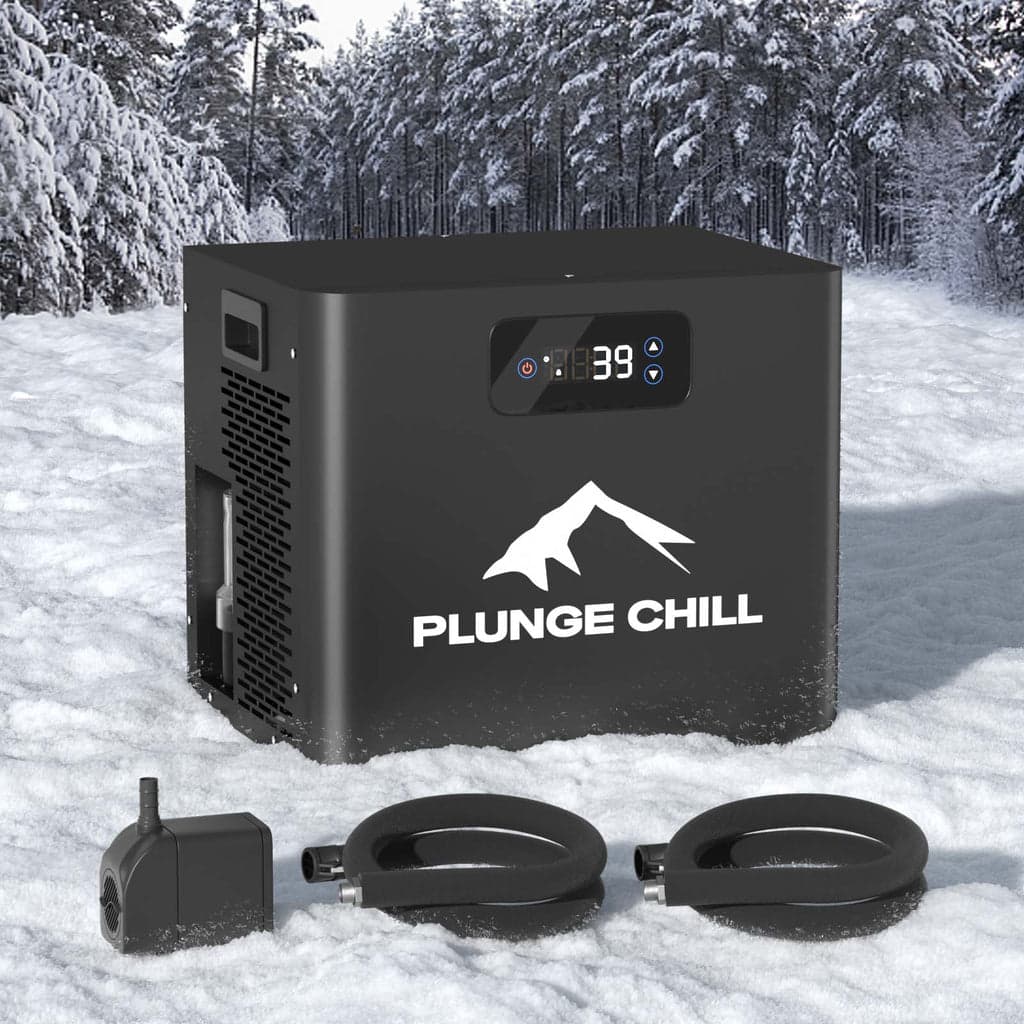
Most chillered tubs (The Plunge, Plunge Chill 1HP Pro) hold 50-55°F easily. Colder-capable builds (Renu Cold Stoic 2.0, Morozko, Brass Monkey) go lower - the Cold Stoic's chiller has a 39°F floor - but most owners settle around 45-50°F for daily use even when they have the option to go colder.
The colder-is-better fallacy
Newer plungers often think going as cold as possible is the goal. It isn't. Below ~42°F, the marginal cardiovascular benefit per additional degree of cold flattens, while the risk of going hypothermic or developing exit problems (heart rate spikes, fainting) rises.
The published cold-water immersion research that shows clear cardiovascular benefit is mostly conducted at 50-59°F. The much-colder protocols (32-38°F ice baths) come from athlete recovery research, where the goal is rapid muscle cooling - not the longevity benefit most home plungers are after.
Different goals, different temperatures
For dopamine + norepinephrine spike (the morning-routine alertness use case): 50-55°F for 3-5 minutes is enough. Going colder doesn't add proportional benefit.
For post-workout muscle recovery: 50-59°F for 10-15 minutes is the protocol most athletic-recovery research uses. Going colder shortens the duration but doesn't necessarily improve recovery.
For mental-toughness training: any temperature you can stay in long enough to feel uncomfortable. The discomfort is the training stimulus, not the absolute temperature.
For brown-fat activation (a popular but speculative goal): around 60°F for longer durations may actually outperform 39°F for shorter ones, based on the limited human research we have.
The temperature-duration tradeoff
Most buyers settle into one of two patterns over time:
- Warmer + longer: 50-55°F for 5-10 minutes. More sustainable as a daily habit, more time for the brain to recalibrate to the cold.
- Colder + shorter: 39-45°F for 1-3 minutes. Higher intensity, sharper dopamine spike, harder to sustain.
The first pattern is what most longevity-focused users converge on. The second is what athletes and ice-bath enthusiasts tend toward.
The sweet spot for most home plungers
Based on the 25+ buyers we've talked to over 90+ days of ownership: 47-52°F for 4-7 minutes per session, 4-5 sessions per week. That protocol produces the dopamine + norepinephrine response, fits in 5-10 minute morning routine slots, and is sustainable without willpower being the limiting factor.
Many start colder and migrate up to this range over the first 30 days as the novelty of "going as cold as possible" wears off and the goal becomes consistency.
The contrast protocol option
If you also have a sauna, the contrast protocol (3-5 minutes hot → 1-2 minutes cold → repeat 2-3x) is a higher-leverage cardiovascular block than either modality alone. For contrast use, the cold half can be warmer (55-60°F) because the sauna heat is doing most of the cardiovascular work.
For the broader cold plunge buyer landscape, the Best Cold Plunges 2026 guide compares the five tier-defining models. For the system-wide approach, the CEO Recovery Stack pairs cold + heat + wearable + protocol layer in one bundle.
- Ryan, Founder
The products this post references


The Longevity Gear Buyer's Checklist
The specs that actually decide whether a sauna, cold plunge, red light panel, or smart ring is worth it, plus the real price range for each. Get the free PDF, plus one weekly email on the gear worth buying.