The Home Air and Water Quality Setup: The Four Jobs Worth Covering (2026)
You breathe and drink more than you eat, and the gear that cleans both is the least glamorous, highest-leverage setup in the home. Here are the four jobs worth covering and the specific device for each.
This article is a paid placement by Kind Water. Lifespan Vault may also earn an affiliate commission on links here, at no extra cost to you. Neither changes our rankings or our verdicts.
Air and water are the two things you take in constantly and think about least. The evidence for addressing indoor air is real: in a randomized, double-blind crossover trial published in the Journal of the American College of Cardiology (Chen et al., 2015), indoor air purification cut fine-particle (PM2.5) levels by 57% and was associated with measurable improvements in blood pressure and inflammatory markers. Water quality is the same quiet story. The good news is that a genuinely good home setup is not one expensive box, it is four specific jobs, and once each is covered you can forget about them.
Here are the four jobs, and the device that does each.
The four jobs at a glance
| Job | Pick | Price | Why |
|---|---|---|---|
| Airborne particles | Airdog X8 | $959-1,199 | Washable plates, no filter bill |
| Humidity and mold | AlorAir Sentinel HDi100 | $1,050 | Basement-rated, drains itself |
| Whole-house water | Kind Water E-3000 | $1,675-1,885 | Salt-free softener plus filter, no brine tank |
| Drinking water | Frizzlife SP99 or Doulton gravity | $110-130 / $200-350 | Certified under-sink, or no-plumbing gravity |
Job 1: airborne particles (the purifier)

A purifier removes the ultrafine particles, allergens, and wildfire smoke that HEPA units target, but the recurring HEPA filter bill is why most people stop maintaining theirs. The Airdog X8 uses washable TPA electrostatic plates instead: it captures particles down to the ultrafine range, then you rinse the plates in the sink rather than buying replacements. No filter subscription, ever. It is a large premium floor unit sized for an open living space, so match it to the room by air-changes-per-hour, not the headline coverage number.
Job 2: humidity and mold (the dehumidifier)

Humidity is the half of indoor air quality that a purifier does not touch. Damp basements and crawl spaces drive mold, dust mites, and the musty air no filter fixes. The AlorAir Sentinel HDi100 is the set-and-forget workhorse: rated for large basements and crawl spaces, with an integrated condensate pump so it drains continuously instead of needing a bucket emptied. Pair it with the purifier and you have covered both particles and moisture, which is the full indoor-air picture.
Job 3: whole-house water (the point-of-entry system)

Whole-house treatment protects every tap and your plumbing. The Kind Water E-3000 combines a salt-free softener and a multi-contaminant filter in one tankless cartridge stack, with NSF/ANSI-certified components, no brine tank, and no wastewater. It conditions scale rather than removing hardness minerals, which is the right trade for a low-maintenance city-water home. It is the base layer that makes every downstream tap better.
Job 4: drinking water (the point-of-use finish)
Whole-house handles general quality; the water you actually drink and cook with deserves a higher-grade final stage, and there are two honest ways to do it.

The Frizzlife SP99 is the value under-sink pick: NSF/ANSI 42 and 53 certified (the certification that covers health contaminants like lead), a 0.5-micron cartridge, and a genuine sub-15-minute install. If you specifically need certified PFAS removal, step up to a reverse-osmosis system instead.
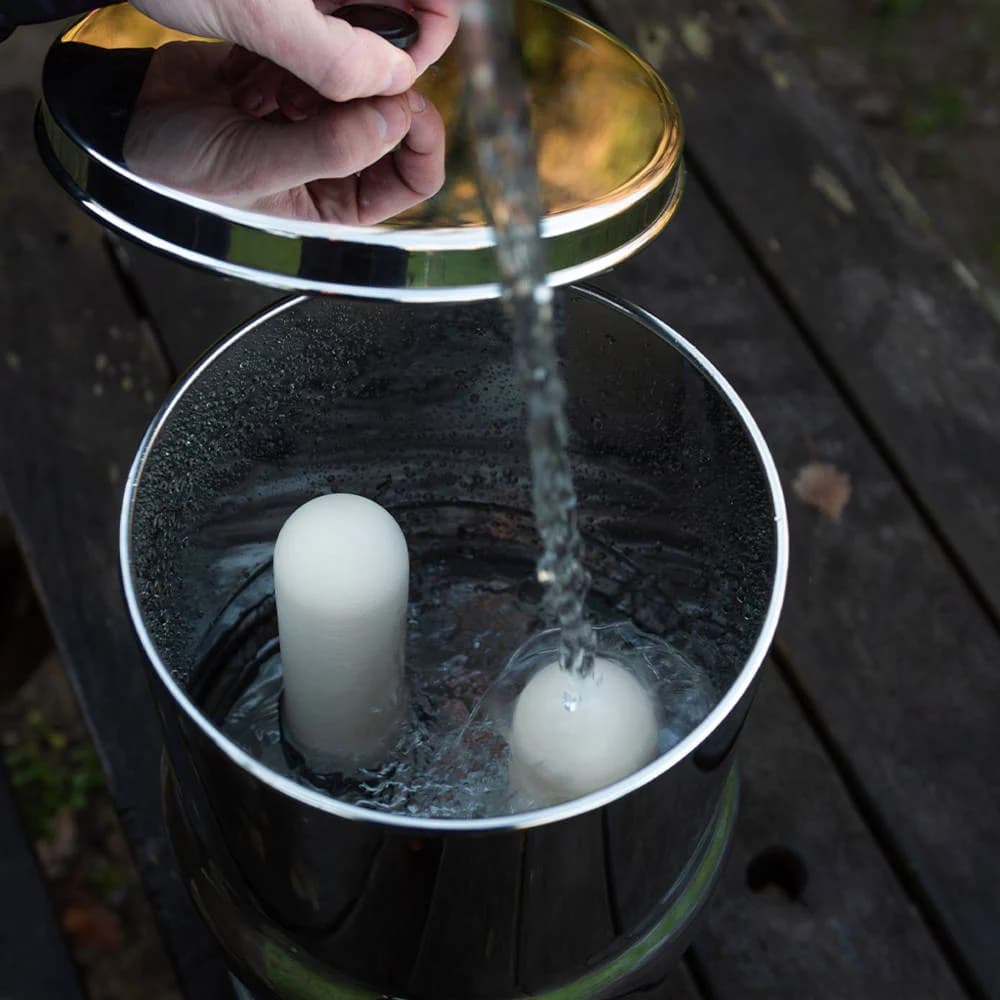
The Doulton British Berkefeld is the counter-thesis to reverse osmosis: a gravity ceramic filter that needs no power or plumbing and, unlike RO, leaves the beneficial magnesium and calcium in the water while filtering out lead, chlorine, and PFAS-class contaminants. It doubles as your grid-down water source. Choose the under-sink for convenience and certified drinking water, or the gravity filter for mineral retention and off-grid resilience.
The full setup, in order
- Air: Airdog X8 for particles, AlorAir HDi100 for humidity.
- Water: Kind Water E-3000 whole-house, finished with either the Frizzlife SP99 under-sink or the Doulton gravity filter at the kitchen tap.
Bottom line
You do not need to buy all four at once, but you should know the four jobs so you buy in the right order. Start with the one that matches your situation: a purifier if you are in a smoke or allergy region, a dehumidifier if you have a damp basement, whole-house filtration if your city water is hard or chlorinated, and a drinking-water finish everywhere. It is the least glamorous gear in the house and among the highest-leverage, because you use it every breath and every glass.
- Ryan, Founder
Kind Water is a paying Lifespan Vault partner. Scores and verdicts remain our own.
What order should I buy air and water upgrades in?
Start with the job that matches your situation: a purifier in a smoke or allergy region, a dehumidifier for a damp basement, whole-house filtration for hard or chlorinated city water, and a drinking-water finish everywhere. You do not need all four at once.
Do air purifiers actually change measurable health markers?
A randomized, double-blind crossover trial published in the Journal of the American College of Cardiology (Chen et al., 2015) found indoor purification cut PM2.5 by 57% and was associated with measurable improvements in blood pressure and inflammatory markers. That is association in a controlled trial, not a treatment claim.
Do I need both an air purifier and a dehumidifier?
They do different jobs. A purifier removes particles (smoke, allergens, ultrafines); a dehumidifier removes the moisture that drives mold and dust mites. A damp basement needs both covered before the indoor-air picture is complete.
Is a gravity water filter better than reverse osmosis?
They trade differently. Reverse osmosis removes the widest contaminant range including certified PFAS reduction, but strips beneficial minerals and needs plumbing. A ceramic gravity filter like the Doulton keeps magnesium and calcium in, needs no power or plumbing, and doubles as an emergency water source.
The products this post references
The Longevity Gear Buyer's Checklist
The specs that actually decide whether a sauna, cold plunge, red light panel, or smart ring is worth it, plus the real price range for each. Get the free PDF, plus one weekly email on the gear worth buying.