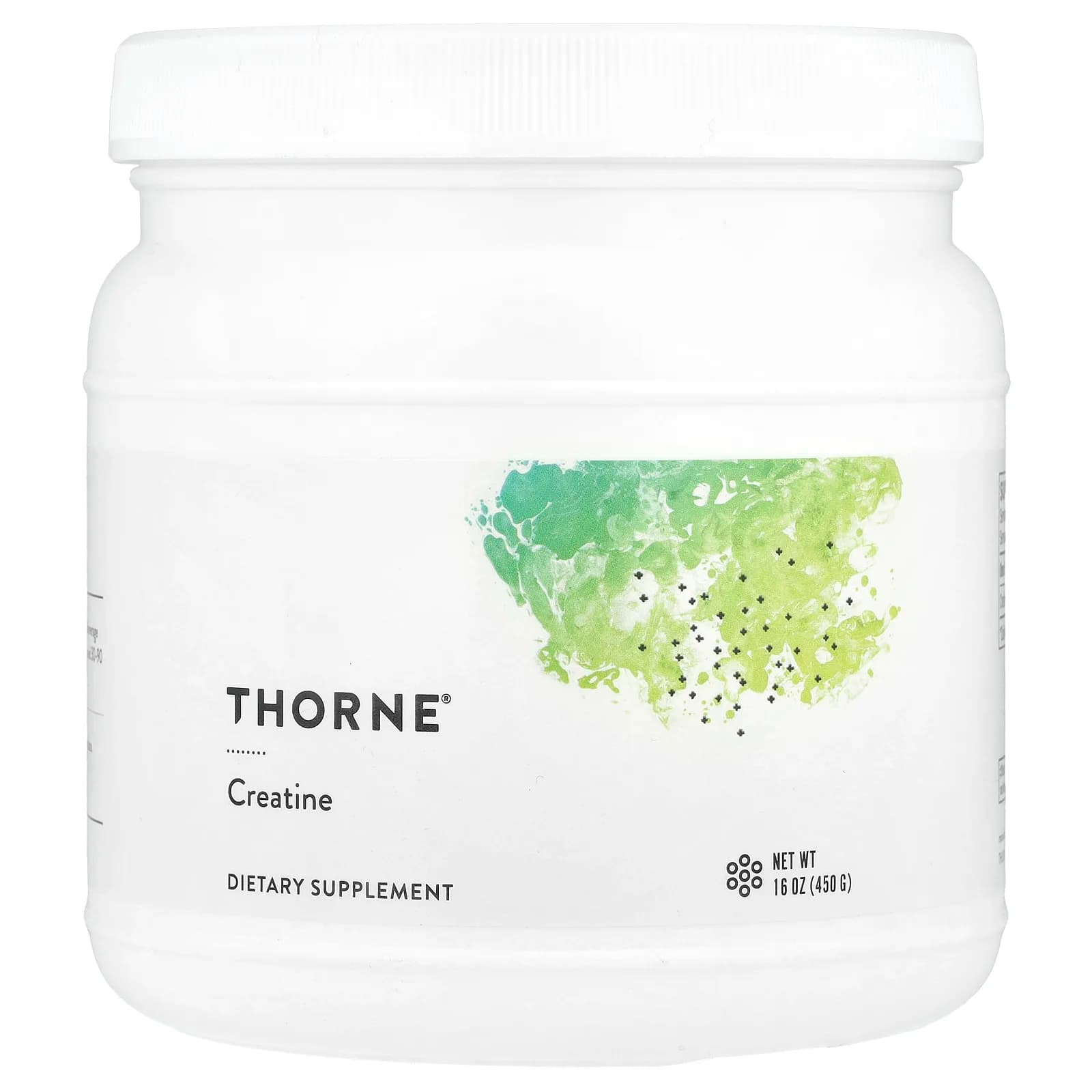
Thorne Creatine
NSF Certified for Sport creatine monohydrate: 5g of micronized creatine per scoop, the most-researched performance supplement in its cleanest, single-ingredient form.
Lifespan Vault earns an affiliate commission when you buy through links on this page, at no extra cost to you. It does not change our rankings or our verdicts.
QUICK VERDICT
Creatine monohydrate is the rare supplement where the evidence is not in question. The only real question is whether the powder in the tub is clean, and that is where Thorne earns its place.
Price: $44 · Verified: 2026-06-23
Creatine monohydrate is the rare supplement where the evidence is not in question. The only real question is whether the powder in the tub is clean, and that is where Thorne earns its place.
Creatine monohydrate is the most-studied supplement in sports nutrition: hundreds of human trials support it for strength, power, and lean mass, and the research base is now expanding into recovery and cognition. The open question is never whether creatine works, it is whether the powder is clean. Commodity creatine is cheap and usually fine, but a drug-tested athlete cannot risk a contaminated lot, and most budget brands never test the finished product.
Thorne Creatine is NSF Certified for Sport, which means an independent lab confirms each lot is free of more than 300 banned substances and that the label matches the tub. It is a single ingredient: 5g of micronized creatine monohydrate per scoop, nothing added, and it mixes cleanly into water or a shake.
At $44 for 90 servings it costs more than commodity creatine. If you are not drug-tested and buy from a reputable brand, commodity monohydrate is genuinely equivalent for less. You are paying Thorne for the third-party certification and the clean-label guarantee, which for tested athletes is the entire point.
Drug-tested athletes, and anyone who wants the most-researched performance supplement in an independently certified, single-ingredient form.
You are not drug-tested and already buy creatine monohydrate from a reputable brand, where the commodity version is biochemically equivalent for less.
Specifications
Most often compared with
Where this fits
Thorne Creatine cross-shops across several editorial surfaces on this site: the full brand catalog, the price band it qualifies for and the in-depth guides for its category.
Thorne Creatine - buyer FAQ
Is Thorne Creatine worth the premium over generic creatine?
For most people, generic creatine monohydrate from a reputable brand is biochemically equivalent and cheaper. The case for Thorne is specific: it is NSF Certified for Sport, so an independent lab tests each lot for 300+ banned substances and label accuracy. If you are a drug-tested athlete, that certification is not optional, and Thorne is one of the few creatines that carries it. If you are not tested, the premium buys peace of mind rather than a performance difference.
What form of creatine is it?
Micronized creatine monohydrate, 5g per scoop, as the only ingredient. Monohydrate is the form with by far the most human research; micronization just means a finer powder that mixes more easily. Thorne does not use the pricier HCl or buffered forms, because monohydrate is the form the evidence actually supports.
Is Thorne Creatine NSF Certified for Sport?
Yes. Thorne Creatine appears in the official NSF Certified for Sport registry, which means an independent lab verifies each production lot is free of more than 300 substances banned by major athletic organizations and that the label is accurate. Note that NSF certification is per-product, so the seal on this item does not automatically apply to every Thorne SKU.
How do I take it?
The standard approach is 5g (one scoop) per day, every day, mixed into water or a shake. Timing barely matters; consistency does, since creatine works by saturating muscle stores over weeks. Some people front-load with about 20g/day for the first week to saturate faster, but it is optional. Nothing here is medical advice.