Best Red Light Panels by Irradiance (2026): The Only Spec That Actually Matters
LED count and wavelength charts are marketing. The one spec that determines whether a red light panel actually does anything is irradiance: how many milliwatts of light per square centimeter reach your skin. Here is the panel landscape ranked by it.
Lifespan Vault earns an affiliate commission when you buy through links on this page, at no extra cost to you. It does not change our rankings or our verdicts. As an Amazon Associate, Lifespan Vault earns from qualifying purchases.
Red light panels are sold on LED count, wavelength charts, and brand stories. Almost none of that is the number that matters. The one spec that determines whether a panel actually delivers a therapeutic dose is irradiance: the power density of light reaching your skin, measured in milliwatts per square centimeter (mW/cm²) at a stated distance.
Here is why it is the whole game. Effective dose is irradiance multiplied by time, and most photobiomodulation studies dose in the range of roughly 10 to 60 J/cm². The arithmetic: at 100 mW/cm², a 10-minute session delivers 60 J/cm² (0.1 W/cm² x 600 seconds), the top of that range. At 60 mW/cm², the same dose takes about 17 minutes. A panel that quietly measures 30 mW/cm² at your actual treatment distance may never deliver a research-grade dose in a realistic session. So before LED count or wavelength count, ask one question: what is the irradiance, and at what distance?
Quick answer
- Serious daily protocol: the Mito Red MitoPRO 1500+ (>150 mW/cm² at 6 inches, ~$1,169) or Joovv Solo 3.0 (~100-130 mW/cm², ~$1,699) clear a research-grade dose in the shortest sessions.
- Most people: the Elvish E900 full-body panel at ~$669 delivers enough output if you accept slightly longer sessions.
- Testing the habit: the Hooga HG500 at ~$349 is real 660/850nm output at the lowest stakes.
The irradiance landscape (at 6 inches, the honest distance)
| Tier | Panel | Irradiance | Price |
|---|---|---|---|
| Benchmark | Mito Red MitoPRO 1500+ | >150 mW/cm² at 6 in | ~$1,169 |
| Benchmark | Joovv Solo 3.0 | ~100-130 mW/cm² at 6 in | ~$1,699 |
| Value full-body | Bestqool Pro300 | ~109 mW/cm² claimed at 3 in (shorter distance inflates it) | $899 |
| Value full-body | Elvish E900 | credible mid-tier | ~$669 |
| Entry / test | Hooga HG500 | ~60-100 mW/cm² at 6 in | ~$349 |
| FDA-cleared handheld | QuasarMD | targeted, skin-focused | ~$299-499 |
Note the Bestqool row: its ~109 mW/cm² is quoted at 3 inches while every other figure here is at 6 inches, which is exactly the distance trick this guide warns about. It is a fine value panel; just do not read its number as benchmark-tier.
A note on the distance trick: some brands quote irradiance at 3 inches, or even at the panel surface, which inflates the number dramatically. Irradiance falls off fast with distance. A figure at 6 inches is the honest, comparable one, because that is roughly how far most people actually sit. When a spec sheet quotes a big number, always check the distance it was measured at.
The benchmarks: highest irradiance in the category
Two panels set the irradiance bar, and it is worth knowing them even if you do not buy them. The Mito Red MitoPRO 1500+ is the value-of-the-premium-tier reference: independently confirmed output above 150 mW/cm² at 6 inches, four wavelengths, for around $1,169. The Joovv Solo 3.0 sits around 100 to 130 mW/cm² with the deepest research footprint and a modular upgrade path, at a brand premium. If your protocol is serious and daily, these are the panels that clear the research-dose bar with the shortest sessions. They are the top of the irradiance ranking, full stop.
The value pick that delivers enough: Elvish E900
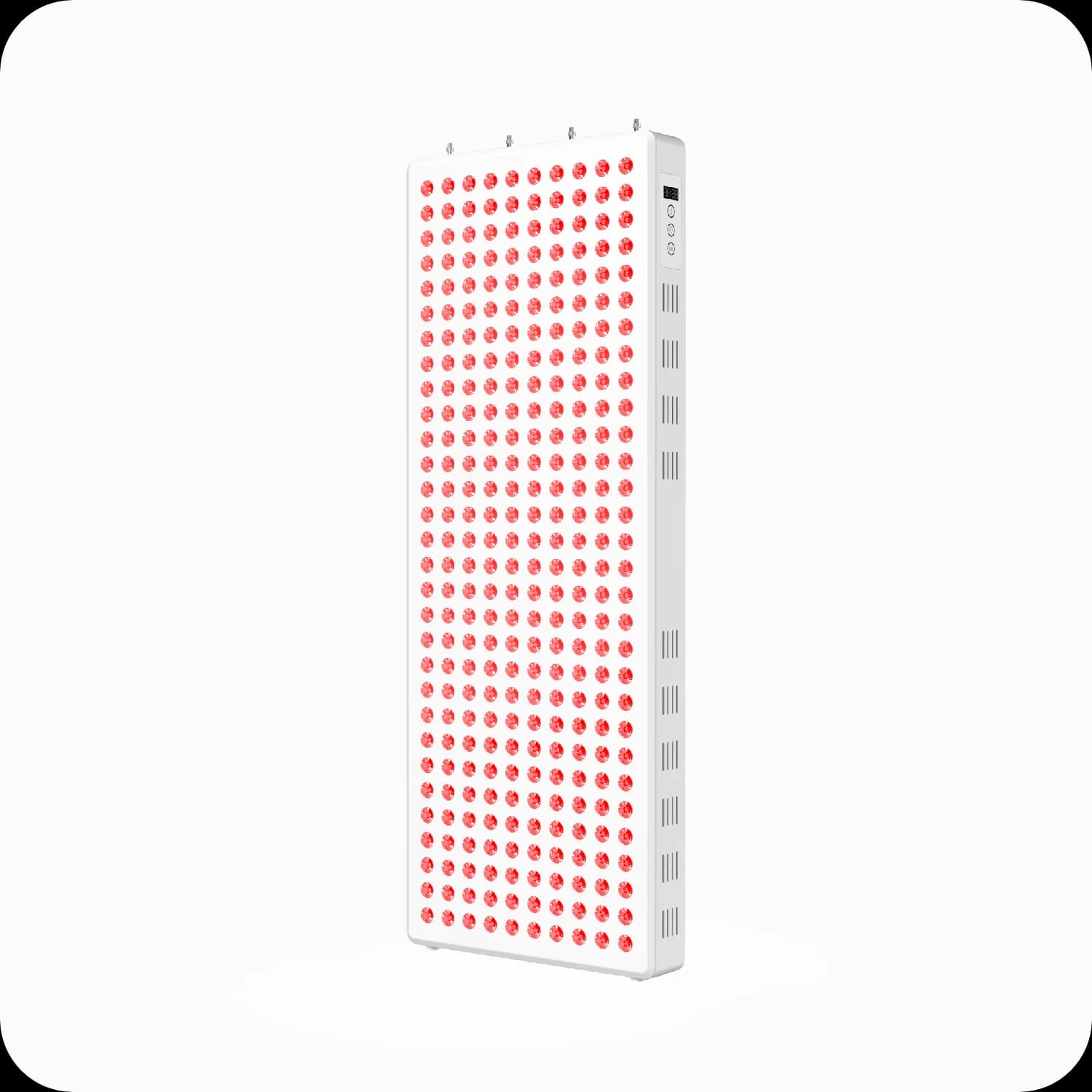
Here is the honest truth most guides bury: for the majority of buyers, you do not need benchmark-tier irradiance. Elvish's full-body E900 lands in the credible mid-tier at around $669, roughly a thousand dollars under a Joovv Solo. It delivers enough output for recovery and general photobiomodulation protocols, as long as you accept slightly longer sessions than a benchmark panel. Elvish is also honest about its own positioning: it owns the recovery-and-value tier rather than pretending to compete at the premium end. For most people, this is the rational full-body buy.
The entry point to test the habit: Hooga HG500

If you are not sure you will use red light four times a week, do not spend a thousand dollars to find out. The Hooga HG500 delivers real 660nm red and 850nm near-infrared at roughly 60 to 100 mW/cm² at 6 inches for about $349. That is lower than the benchmark tier, which means longer sessions for an equivalent dose, but it is genuine red and near-infrared output, not the fake-IR LEDs some sub-$200 panels use. Our editorial team runs one daily. It is the right low-stakes way to test whether the habit sticks before upgrading.
The targeted, FDA-cleared option: QuasarMD
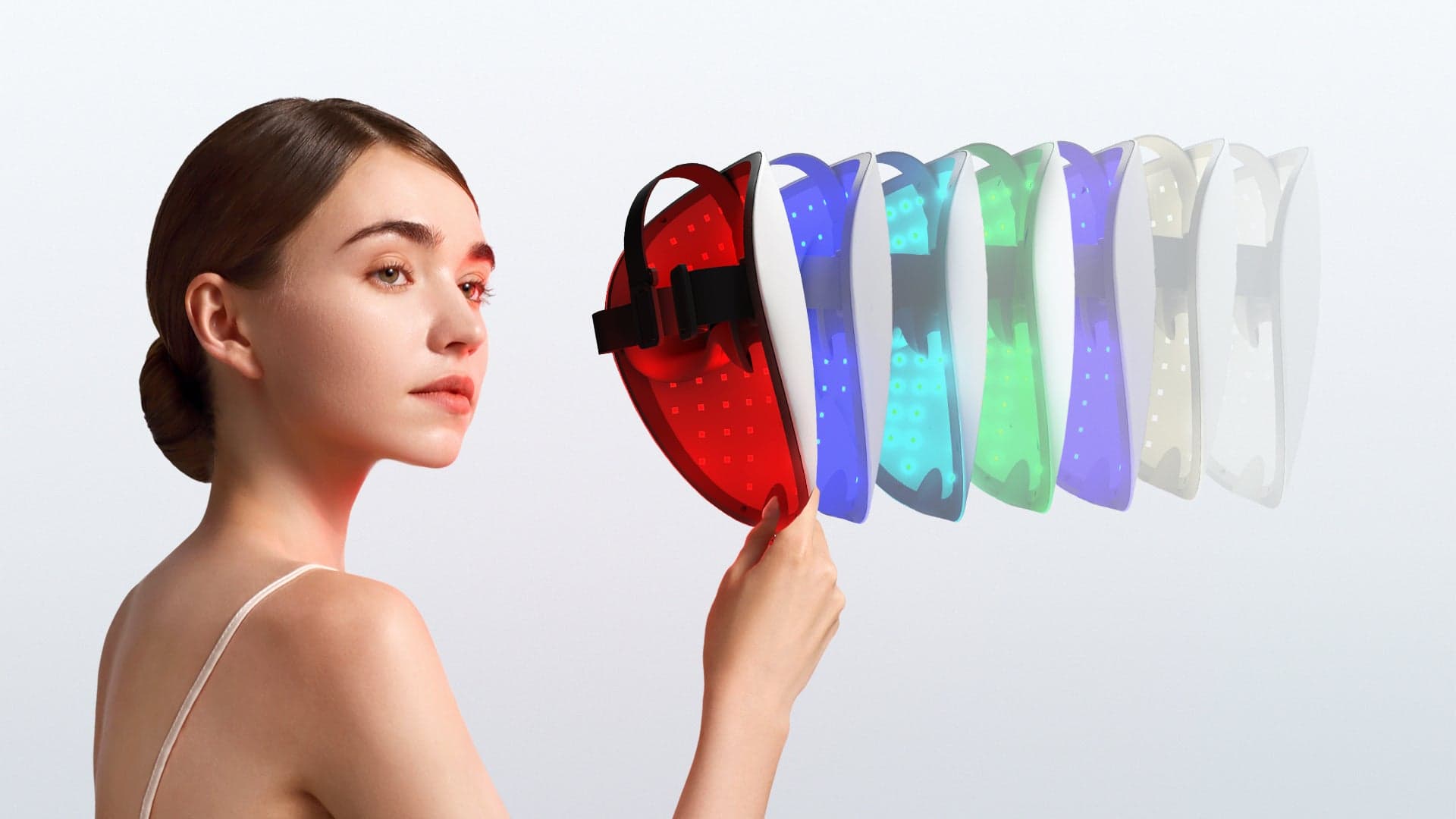
Irradiance ranking is a full-body-panel conversation, but if your goal is specifically face and skin, a handheld changes the math. The QuasarMD is an FDA-cleared, open-air handheld with 20-plus years of history in dermatology offices, now at a home-use price of roughly $299 to $499. It is not competing on full-body irradiance, it is the clinically-pedigreed pick for targeted red light on the face.
How to choose
- Serious daily full-body protocol, want the shortest sessions: the benchmark tier, Mito Red MitoPRO 1500+ for irradiance-per-dollar or Joovv Solo 3.0 for research pedigree and modularity.
- Most people, full-body, value-first: Elvish E900, enough irradiance at a real discount.
- Testing the habit: Hooga HG500, genuine output at the lowest stakes.
- Face and skin only: QuasarMD, FDA-cleared handheld.
Bottom line
Ignore LED count and wavelength charts until you have answered the irradiance question, at a stated distance of 6 inches. The benchmark panels (Mito Red, Joovv) top the ranking on raw output, but most buyers get everything they need from the value tier as long as they accept slightly longer sessions. Match the irradiance to how serious your protocol actually is, buy the panel that clears the dose you need, and stop paying for specs that do not move photons into tissue.
- Ryan, Founder
What is a good irradiance for red light therapy?
At 6 inches: 100 mW/cm2 or more delivers a research-range dose (roughly 10-60 J/cm2) in about 10 minutes. Panels at 60-100 mW/cm2 work too, they just need proportionally longer sessions. Always check the distance a spec was measured at.
Why does measurement distance matter for irradiance?
Irradiance falls off quickly with distance, so a number quoted at 3 inches or at the panel surface looks far bigger than the same panel measured at 6 inches, which is roughly where people actually sit. Compare panels only at the same stated distance.
Is a higher LED count better in a red light panel?
No. LED count is a marketing number. Total irradiance at your treatment distance is what sets your dose: a panel with 100 high-output LEDs can outperform one with 300 weaker LEDs.
What is the best budget red light panel?
The Hooga HG500 at about $349. It delivers genuine 660nm red and 850nm near-infrared at roughly 60-100 mW/cm2 at 6 inches, which is real output at the lowest stakes, unlike some sub-$200 panels that use ineffective LEDs.
Do I need a full-body panel for face and skin work?
No. For face and skin specifically, an FDA-cleared handheld like the QuasarMD ($299-499) is the clinically-pedigreed pick, and it costs a fraction of a full-body benchmark panel.
The products this post references
The Longevity Gear Buyer's Checklist
The specs that actually decide whether a sauna, cold plunge, red light panel, or smart ring is worth it, plus the real price range for each. Get the free PDF, plus one weekly email on the gear worth buying.