Hydrow Arc vs Echelon Row-s: Which Rower in 2026?
The Hydrow Arc is the flagship of the brand that defined connected rowing: $2,195 plus $50 a month. The Echelon Row-s covers the same job for $1,299.99 plus $39.99 a month. The 5-year math shows a gap of about $1,895, and the honest answer depends on which cost you actually feel.
Lifespan Vault earns an affiliate commission when you buy through links on this page, at no extra cost to you. It does not change our rankings or our verdicts.
Hydrow Arc vs Echelon Row-s is really a question about what an extra $895 buys. The Hydrow Arc is the flagship of the brand that made connected rowing a category: $2,195, a 24-inch HD screen, computer-controlled electromagnetic drag, and an AI layer that scores every stroke, all verified 2026-08-24. The Echelon Row-s sells the same core job, class-led rowing on a screen in your home, for $1,299.99 against a $1,799.99 compare-at, verified 2026-08-24 from the product page.
The short answer: the Echelon wins the math, by about $1,895 over five years once both memberships are counted, and the Hydrow Arc wins the hardware and the content, with a two-inch larger screen, automated electromagnetic resistance, and a class library polished enough that people keep showing up for it. Which one is right depends on whether the hardware saving or workout adherence is your binding constraint. The full cost table is below.
Quick answer
- Content-first buyer: the Hydrow Arc at $2,195, the largest 24-inch screen in Hydrow's lineup plus HydroMetrics AI stroke scoring (verified 2026-08-24).
- Value buyer: the Echelon Row-s at $1,299.99 against a $1,799.99 compare-at, $895 less hardware with a 22-inch screen (verified 2026-08-24).
- Hydrow on a budget: the Hydrow Origin at $1,745, the cheapest way into the exact same class library, minus the Arc's screen and AI metrics (verified 2026-08-24).
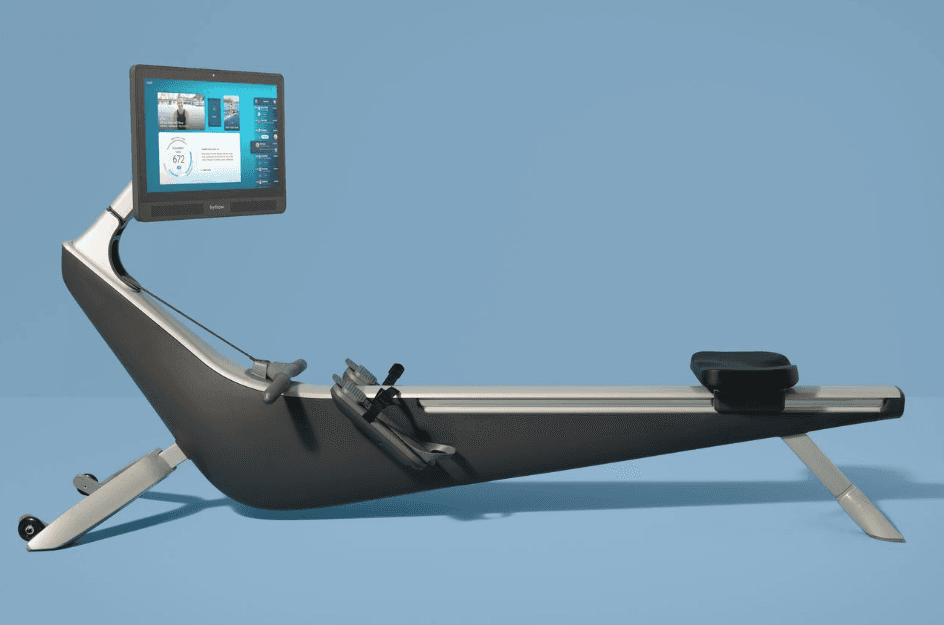
At a glance (verified 2026-08-24)
| Hydrow Arc | Echelon Row-s | |
|---|---|---|
| Price | $2,195; lineup from $1,745 (Origin) | $1,299.99 against a $1,799.99 compare-at |
| Screen | 24-inch HD, largest in the lineup | 22-inch Class HD, swivels 90 degrees for floor classes |
| Resistance | Computer-controlled electromagnetic drag | 32 electronic magnetic levels, handlebar Bluetooth controller |
| AI metrics | HydroMetrics stroke scoring (precision, power, endurance) | None listed |
| Subscription | All-access $50/mo, or $600 prepaid for a year | Premier $39.99/mo or $399.99/yr (verified 2026-09-30) |
| Storage | Full-size footprint, no fold listed | Stores upright; 85" x 24" footprint in use, 108 lb |
| Max user weight | Not published in our verified specs | 350 lb |
Every figure above was verified 2026-08-24 except Echelon Premier pricing, which was verified 2026-09-30.
Both brands were founded in 2017, both are US companies, and both run the Peloton playbook: sell the machine, then charge monthly for the classes that make it worth using. The real differences are two inches of screen, the resistance system, and $895 of hardware price.
Hydrow Arc: the category leader's flagship
Hydrow is the brand that made connected rowing a category, and the Arc, launched in late 2025, is its most advanced machine. The resistance is computer-controlled electromagnetic drag that mimics the feel of a boat pulling through water, quieter and smoother than air or water rowers, and adjusted automatically rather than by hand. The 24-inch HD screen streams live and on-demand classes filmed on real waterways, and HydroMetrics, the Arc-exclusive AI layer, scores every session across precision, power, and endurance.
The lineup pricing matters here: the Origin is $1,745, the Wave $1,845, and the Arc $2,195 (verified on hydrow.com, 2026-08-24), all sale prices against MSRPs of $2,195, $1,995 and $2,295. All three run the same class library behind the same all-access membership of $50 a month, or $600 prepaid for a year. The rower still works without the membership, but the guided content and metrics are the reason most people choose Hydrow over a bare machine.
Where it gives ground: the real price is the hardware plus $600 a year in membership, it is a full-size rower with no folding option listed, and if you just want effective rowing with no screen, a screenless benchmark rower like a Concept2 costs far less. Verdict by buyer type: buy the Arc if the class experience and stroke-level feedback are what will keep you rowing three times a week; buy the Origin if you want the same content with $450 less hardware; skip Hydrow entirely if you will not pay a monthly fee.
Echelon Row-s: the value alternative

The Row-s is aimed squarely at buyers who want the connected-rower experience without the category-leader price. You get a 22-inch Class HD touchscreen that swivels through 90 degrees so you can turn it off the rail for floor and strength classes, 32 electronic magnetic resistance levels changed from the handlebars over a patent-pending Bluetooth controller, a 350-pound max user weight, an 18-inch seat height, and an upright store position. The frame measures 85 inches long by 24 inches wide by 45 inches high and weighs 108 pounds. At $1,299.99 against a $1,799.99 compare-at (verified 2026-08-24 from Echelon's product page), it comes in $445 under Hydrow's cheapest current rower and $895 under the Arc.
The classes run on Echelon Premier at $39.99 a month or $399.99 a year, verified 2026-09-30 on Echelon's membership page. Echelon's own pages are inconsistent about whether a plan is strictly required with an equipment purchase, but the screen's functionality is limited without one, so treat the subscription as part of the real cost.
Where it gives ground: the screen is 22 inches against the Arc's 24, there is no AI stroke scoring, resistance changes are manual, and the warranty is one year on the equipment, with four more years, five in total, only while you stay an active Premier Member, per Echelon's terms (the product page calls it the Premier 4-Year Warranty Guarantee, the membership page the Premier 5-Year Warranty Guarantee). The frame is 85 inches long, so it is the upright store position that saves floor space, not the in-use footprint. And treat the $1,799.99 as an anchor rather than a price anyone pays, which means judging the machine at $1,299.99. Verdict by buyer type: buy the Row-s if the $895 hardware saving matters more than two inches of screen and automated resistance; skip it if you want a multi-year warranty that does not depend on keeping a membership active, or if the biggest screen in the category is what keeps you coming back.
The 5-year cost math neither brand will show you (verified 2026-08-24)
This is the table that decides the comparison, because on connected rowers the subscription rivals the hardware as the real cost. Math uses each machine's verified price, Hydrow's $50 monthly membership, and Echelon's cheaper annual plan.
| Cost line | Hydrow Arc | Echelon Row-s |
|---|---|---|
| Hardware | $2,195 | $1,299.99 |
| Membership | $50/mo, $600/yr prepaid | $399.99/yr on the annual plan ($39.99 if monthly) |
| Year-1 total | About $2,795 | About $1,700 |
| 5-year total | About $5,195 | About $3,300 |
| Cost per session (3 rows/week, ~780 sessions) | About $6.66 | About $4.23 |
Three honest observations from that table. First, the Echelon saves about $1,895 over five years, and the gap is structural: $895 less hardware and a membership that runs about $200 a year less. Second, both sticker prices are promotional. Hydrow's $2,195 sits against a $2,295 MSRP, and Echelon's $1,299.99 sits against a $1,799.99 compare-at that reads as an anchor rather than a price anyone pays, so re-check both before you buy. Third, the subscription is the line that compounds: across five years Hydrow's membership alone is $3,000 and Echelon's is about $2,000, which means on either machine the classes cost more than the machine.
How to choose
- You want the most polished content and the biggest screen: the Hydrow Arc at $2,195, plus $50 a month.
- You want class-led rowing at the lowest total cost: the Echelon Row-s at $1,299.99, about $3,300 all-in over five years.
- You want Hydrow's library without flagship pricing: the Hydrow Origin at $1,745.
- Your rower must disappear between sessions: the Echelon Row-s, which stores upright; the Arc has no fold listed.
- You refuse a monthly fee on principle: neither machine is the right buy. A screenless benchmark rower costs far less, and our no-subscription smart home gym roundup covers connected gear with zero recurring fees.
For the rest of a home cardio setup, see our walking pad and under-desk treadmill guide, the Amazon home gym essentials list, and everything else in the fitness category.
Bottom line
The Echelon Row-s wins the math: $1,299.99, a cheaper membership, and about $1,895 saved over five years, with an upright store position the Arc cannot match. The Hydrow Arc wins the hardware: a 24-inch screen against the Row-s 22-inch, automated electromagnetic drag, and AI stroke scoring from the brand that defined the category, and adherence is the whole reason to buy a connected rower over a bare machine. If the content is what keeps you rowing, the Arc earns its premium; if you want the classes on a large screen for $895 less, the Row-s covers the job. Either way, budget the membership as part of the machine, because that is what these products really are.
Prices verified 2026-08-24 against our catalog, except Echelon Premier subscription pricing, verified 2026-09-30. Specifications are as published by each brand. We have not rowed either machine; this is a desk assessment built from verified pricing and published specification.
- Ryan, Founder
Is the Hydrow Arc worth the extra cost over the Echelon Row-s?
Only if the content is the product for you. The Arc is $2,195 against the Row-s at $1,299.99, both verified 2026-08-24, so the hardware gap is $895. Hydrow's all-access membership is $50 a month against Echelon Premier at $39.99, which puts the five-year gap at roughly $1,895. You are paying that premium for a 24-inch screen against 22, automated electromagnetic drag, and HydroMetrics AI scoring, not for a fundamentally different workout. Echelon Premier pricing was verified 2026-09-30.
How much cheaper is the Echelon Row-s than a Hydrow?
At $1,299.99 against a $1,799.99 compare-at, verified 2026-08-24, the Row-s undercuts every Hydrow in the same day's sale: the Origin at $1,745, the Wave at $1,845, and the flagship Arc at $2,195. That is $445 under Hydrow's cheapest rower and $895 under the Arc. Hydrow's figures are sale prices against MSRPs of $2,195, $1,995 and $2,295, so confirm the current numbers before buying.
Do Hydrow and Echelon rowers require a subscription?
Both gate their class libraries behind a membership. Hydrow's all-access plan is $50 a month, or $600 prepaid for a year, verified 2026-08-24, and the rower still works without it. Echelon Premier is $39.99 a month or $399.99 a year, verified 2026-09-30, and the Row-s screen is limited without it. Treat the subscription as part of the real cost on either machine.
What is the difference in resistance between the Hydrow Arc and Echelon Row-s?
The Hydrow Arc uses computer-controlled electromagnetic drag that mimics the feel of a boat pulling through water and adjusts automatically. The Echelon Row-s uses 32 electronic magnetic resistance levels changed from the handlebars over a patent-pending Bluetooth controller, so you set intensity yourself mid-row. That automation gap, plus the 24-inch screen against the Row-s 22-inch, is most of what the Arc's extra $895 in hardware buys. Specifications verified 2026-08-24.
Which rower is better for small spaces, the Hydrow Arc or the Echelon Row-s?
The Echelon Row-s, but only because it stores upright. Its frame measures 85 inches long by 24 inches wide by 45 inches high, weighs 108 lb, and occupies an 85 by 24 inch footprint in use, all verified 2026-08-24, so it needs real floor length while you row and then goes vertical between sessions. The Hydrow Arc is a full-size rower with no folding option listed. Neither is a small-room machine mid-workout.
The products this post references
The Longevity Gear Buyer's Checklist
The specs that actually decide whether a sauna, cold plunge, red light panel, or smart ring is worth it, plus the real price range for each. Get the free PDF, plus one weekly email on the gear worth buying.