Lifespan Vault earns an affiliate commission when you buy through links on this page, at no extra cost to you. It does not change our rankings or our verdicts.
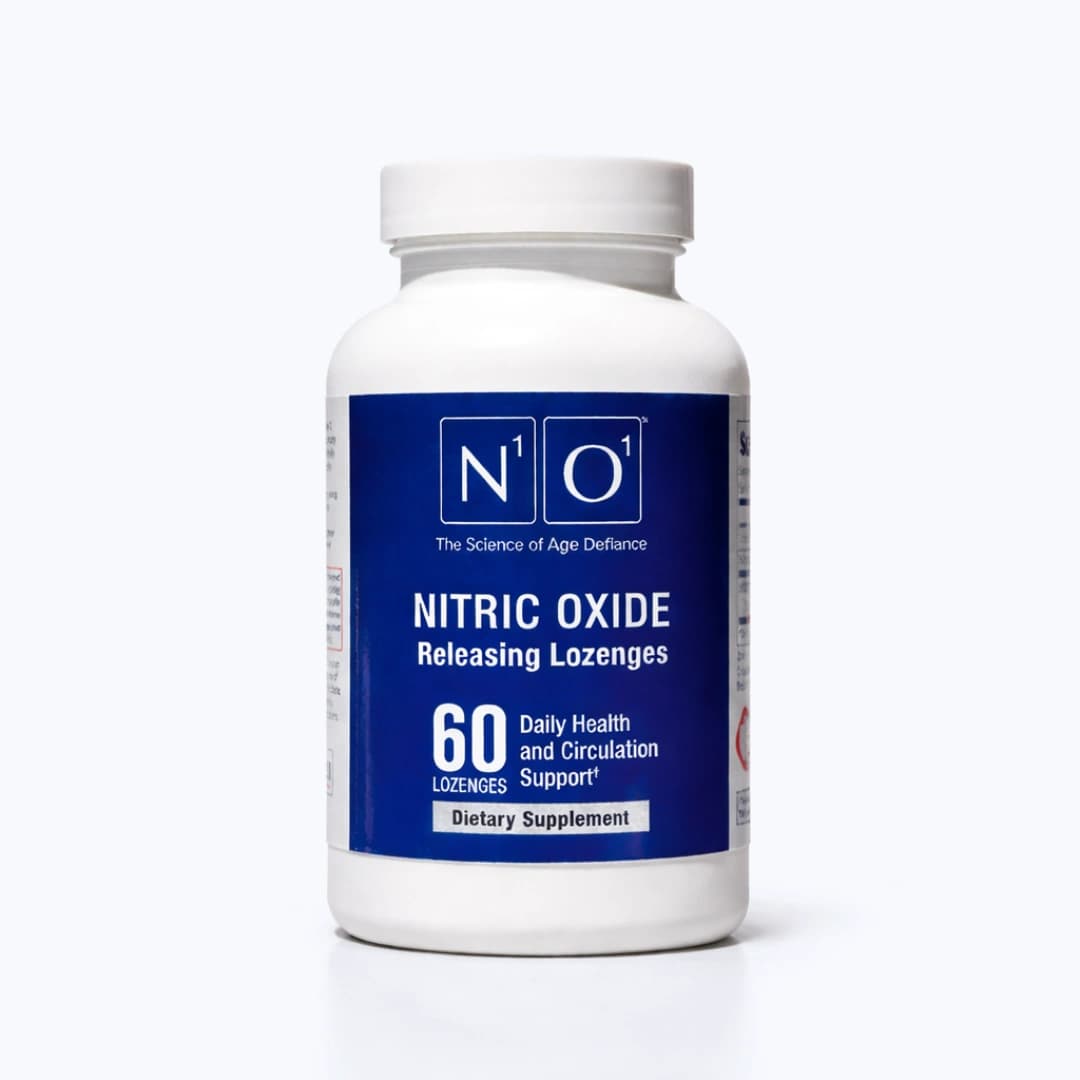
Every product in this category sells the same molecule and hides a different number. Nitric oxide supplements split into three delivery formats in 2026: dissolving nitrite lozenges, led by N1O1 Nitric Oxide Lozenges at $59.98 for a 60-count bottle; beet-root powders that supply dietary nitrate, like 1st Phorm Opti-Reds 50 at $66.99; and multi-ingredient blends that fold L-citrulline into a broader mix, like Vibras Hydration + Energy at $58 for 30 sticks. The formats are genuinely different products, and the brands themselves describe different routes to the same molecule.
What the formats share is what their labels do not say. Of the four products we priced for this roundup, not one disclosed enough dosing data to calculate cost per milligram of its nitric-oxide-relevant active. N1O1's 220 mg proprietary blend does not break out its sodium nitrite. Vibras never publishes its L-citrulline milligrams. That, more than any format debate, is the buying problem this page is built around.
Quick answer
- Nitrite lozenge buyer: the N1O1 Nitric Oxide Lozenges at $59.98 for 60, the researcher-founded flagship of the dissolve-in-mouth format, $1.60 a day on subscription.
- Dietary nitrate buyer: 1st Phorm Opti-Reds 50 at $66.99, the polyphenol and beet-nitrate half of 1st Phorm's foundational greens-and-reds pairing.
- One-stick consolidator: the Vibras Hydration + Energy Mix at $58 for 30 sticks, L-citrulline inside a sugar-free hydration and caffeine stick rather than a standalone nitric oxide product.
At a glance: three formats, one disclosure problem
| Product | Format | NO-relevant label entry | Verified price | Active mg disclosed? | Finished-product cert? |
|---|---|---|---|---|---|
| N1O1 Nitric Oxide Lozenges | Dissolving lozenge | Sodium nitrite, inside a 220 mg proprietary blend | $59.98 for 60, verified 2026-08-14 | No | None published as of August 2026 |
| 1st Phorm Opti-Reds 50 | Powder | Beet-nitrate and polyphenol blend, per the brand | $66.99, verified 2026-07-04 | Not in our verified data | Not in our verified data |
| Vibras Hydration + Energy | Drink stick | L-citrulline, one of 8 functional ingredients | $58 for 30, verified July 2026 | No | Facility-level claim only, no per-SKU listing |
Prices verified against each brand's own store data on the dates shown.
Two routes to one molecule, as the brands describe them
The lozenge route starts with nitrite. N1O1's Supplement Facts label lists a 220 mg proprietary blend of magnesium ascorbate and sodium nitrite, and the brand states the lozenge releases nitric oxide as it dissolves in the mouth. The beet route starts a step earlier, with dietary nitrate: brands in that category describe a stepwise conversion in which bacteria in the mouth reduce nitrate toward nitrite before the body can use it. Both descriptions are the brands' own positioning, both product classes carry the standard FDA structure-function disclaimer, and nothing on this page is an efficacy claim of ours.
The practical read for buyers: a label listing sodium nitrite and a label listing beet-root nitrate are claiming different routes, so treating them as interchangeable line items on a price sheet misses what the brands themselves say separates them. It also means the one number that would let you compare products across formats, milligrams of the named active, matters more here than in most categories. Which is the category's problem, because almost nobody publishes it.
N1O1 Nitric Oxide Lozenges: the researcher-founded flagship
The bottle's real differentiator is its founder. Dr. Nathan S. Bryan is a published researcher in nitric oxide biochemistry, and the product page's science section links to PubMed-indexed papers he co-authored. Read that credential precisely: the citations cover nitric oxide biology broadly, not independent trials of this finished lozenge, and we have not evaluated the product's claims ourselves. The brand positions the lozenge as support for circulation, everyday energy, and cardiovascular wellness; those are N1O1's structure-function statements, not ours.
The label discloses 164 mg of vitamin C (182% DV) and 12.8 mg of magnesium (3% DV), both from magnesium ascorbate, then puts the working part of the formula inside a 220 mg proprietary blend of magnesium ascorbate and sodium nitrite. Sweetness comes from mannitol, stevia, and monk fruit. The purchase math is clean: $59.98 for 60 lozenges is $1.00 each, and the brand's recommended one lozenge twice a day, 12 hours apart, makes a bottle a 30-day supply at $2.00 a day. The subscription drops each delivery to $47.98, a 20% discount, which is $1.60 a day, and a Buy 3 Get 1 Free bundle runs $179.94. All figures pulled from the brand's own storefront API on August 14, 2026.
Where it gives ground: the blend does not disclose its sodium nitrite milligrams, we found no third-party certification for the finished product on the product page as of August 2026, and $2.00 a day prices it well above commodity beet-root powder. The brand's own FAQ also acknowledges some users feel mouth sensitivity from the vitamin C; its suggested fix is swishing baking soda in 2 to 3 ounces of water for 30 to 60 seconds before a lozenge.
Verdict: the pick for buyers who specifically want the nitrite lozenge format from a researcher-founded brand and will use the subscription to bring it to $1.60 a day. Skip it if you want disclosed active milligrams or a per-SKU certification before you pay.
The beet-powder route: Opti-Reds 50 and N.O. Beetz
The dietary nitrate route is where the category's budget end lives, and it is also where two very different sellers converge. 1st Phorm Opti-Reds 50 at $66.99, verified via the brand's own store data on July 4, 2026, is the polyphenol and beet-nitrate complement to the $69.99 Opti-Greens 50 in 1st Phorm's foundational stack, covered in full on our Opti-Greens page. It comes from a St. Louis sports-nutrition brand founded in 2009, which is the right frame: mainstream fitness nutrition, not a longevity lab with a published polyphenol dossier.
N1O1 itself sells the other data point: N.O. Beetz, the brand's beet-based alternative to its own lozenge, at $69.98, verified August 2026. That a nitrite-lozenge company also sells a beet product is the clearest signal in the category that the two formats are positioned as different routes rather than substitutes.
Where the route gives ground: disclosure again. Neither product publishes the numbers we would need to run per-day math from page data alone. N.O. Beetz does not state its serving count in the page text, and Opti-Reds 50's serving and nitrate figures are not in our verified catalog data. Commodity beet-root powders undercut everything on this page on price, which is why they remain the default budget answer, but the open-label versions are also the exception in a blend-heavy category.
Verdict: the route for buyers who want the food-derived nitrate approach, with Opti-Reds 50 the pick if you already live in 1st Phorm's stack, and plain single-ingredient beet-root powder the honest answer if cost per serving is the whole question.

Vibras: what L-citrulline looks like inside a blend
Vibras is not sold as a nitric oxide supplement, and that is why it belongs on this page. It is a sugar-free hydration and energy stick that runs eight functional ingredients, pink Himalayan salt, potassium citrate, magnesium glycinate, cordyceps, L-theanine, Alpha GPC, PurCaf organic caffeine, and L-citrulline, at $58 for 30 sticks, $1.93 per serving, verified July 2026. The performance language on its product page, which reaches nitric oxide, stamina, and reaction time, comes from the brand and its stated R&D director, not from independent testing.
Here is the label pattern to learn from it: the only ingredient with a published per-serving number is caffeine, at 100 mg. The L-citrulline milligrams are not published, and neither are the sodium, potassium, or magnesium amounts. The manufacturing claim follows the same shape: an FDA-registered, GMP-certified, NSF for Sport certified facility, which is a facility-level statement from the brand's FAQ, not a per-SKU NSF Certified for Sport listing. This is what most L-citrulline exposure actually looks like in 2026: a named ingredient at an unnamed dose inside someone else's formula.
Verdict: buy Vibras as what it is, a training-day hydration and caffeine consolidator with a 30-day money-back guarantee, and read its citrulline line as a bonus you cannot quantify. Skip it if you are shopping for a measured citrulline dose; a blend with undisclosed milligrams cannot be that product.
The math the labels will not let you run
Our standard move on a supplement roundup is a cost-per-effective-milligram table. Here is what happens when you try to build one for nitric oxide products, from store data verified July and August 2026:
| Product | Verified price | Cost per serving | Named active | Cost per active mg |
|---|---|---|---|---|
| N1O1 Nitric Oxide Lozenges | $59.98 for 60 | $1.00 per lozenge, $2.00 per day at the label dose | Sodium nitrite, mg undisclosed | Not computable |
| N1O1 N.O. Beetz | $69.98 | Not computable, serving count not in the page text | Beet-derived nitrate, mg undisclosed | Not computable |
| 1st Phorm Opti-Reds 50 | $66.99 | Not in our verified data | Beet-nitrate blend, mg undisclosed | Not computable |
| Vibras Hydration + Energy | $58 for 30 | $1.93 per stick | L-citrulline, mg undisclosed | Not computable |
Zero of the four products let you compute cost per milligram of the active they are named for, and two of the four do not even support per-serving math from their published page data. That is the category in one table. For contrast, the adjacent creatine aisle makes the same math trivial: 1st Phorm's Micronized Creatine Monohydrate, from $29.99, carries a per-SKU listing confirmed in NSF's own Certified for Sport database. Per-SKU disclosure and certification are normal elsewhere in supplements, and our best Thorne supplements guide is built around that kind of per-SKU verification.
How to choose
- You want the lozenge format and the researcher pedigree: the N1O1 lozenges at $59.98, and take the 20% subscription to bring it to $1.60 a day.
- You want the food-derived nitrate route: Opti-Reds 50 at $66.99 if you already run 1st Phorm's stack; plain commodity beet-root powder if lowest cost per serving is the whole question.
- You want citrulline only as part of a training drink: Vibras at $1.93 per stick, priced against your hydration mix and your caffeine at the same time.
- You want disclosed milligrams before you pay: none of these four qualifies. Single-ingredient products with open labels are the route, and this table is the reason to insist on one.
- Your supplement budget has other priorities: start with our gut health supplements guide for the category where we have the deepest verified bench.
Bottom line
The nitric oxide category's real divide is not lozenge versus beet powder, it is disclosed versus undisclosed. N1O1's lozenges at $59.98 for 60 are the strongest expression of the nitrite-lozenge format and carry the category's most credentialed founder, with a proprietary blend and no finished-product certification as the stated trade-offs. Beet powders like Opti-Reds 50 cover the dietary nitrate route at similar prices with the same disclosure gap. Until this category publishes its milligrams the way creatine does, buy by format and by the label facts a brand is willing to print, and treat every performance claim as the brand's own.
What is the best nitric oxide supplement in 2026?
It depends on the delivery route you want. For a dissolving nitrite lozenge, N1O1 Nitric Oxide Lozenges at $59.98 for 60 is the researcher-founded flagship of the format. For the dietary nitrate route, beet products like 1st Phorm Opti-Reds 50 at $66.99 cover it. No product we priced disclosed enough dosing data to name a milligram-for-milligram winner.
How much sodium nitrite is in N1O1 lozenges?
N1O1 does not say. The Supplement Facts label lists a 220 mg proprietary blend of magnesium ascorbate and sodium nitrite without breaking out the milligrams of each, alongside 164 mg of vitamin C and 12.8 mg of magnesium that are disclosed. The undisclosed split means you cannot compare its active dose against any other nitric oxide product on the market.
What is the difference between a nitrite lozenge and beet-root powder?
The starting molecule, per the brands themselves. N1O1's lozenge blend lists sodium nitrite, and the brand states the lozenge releases nitric oxide as it dissolves in the mouth. Beet products supply dietary nitrate instead, which brands in that category describe as converting stepwise, with bacteria in the mouth handling part of the reduction. Both descriptions are brand positioning, not our efficacy claims.
Are nitric oxide supplements third-party tested?
Usually not at the finished-product level. N1O1 publishes no third-party certification for its lozenge as of August 2026, and Vibras claims an NSF for Sport certified facility, which is not a per-SKU listing. Per-SKU certification exists in adjacent aisles: 1st Phorm's creatine monohydrate, from $29.99, appears in NSF's own Certified for Sport database.
How much do nitric oxide supplements cost per day?
N1O1 lozenges run $2.00 a day at the brand-recommended two per day ($59.98 for 60), or $1.60 a day on the 20% subscription. Vibras costs $1.93 per stick at $58 for 30. For N1O1's N.O. Beetz at $69.98 and 1st Phorm Opti-Reds 50 at $66.99, per-day math is not computable, because serving counts are not in the page data we verified in July and August 2026.
The products this post references
The Longevity Gear Buyer's Checklist
The specs that actually decide whether a sauna, cold plunge, red light panel, or smart ring is worth it, plus the real price range for each. Get the free PDF, plus one weekly email on the gear worth buying.