Lifespan Vault earns an affiliate commission when you buy through links on this page, at no extra cost to you. It does not change our rankings or our verdicts.
Blood tests can help answer specific clinical questions. They cannot certify that an unapproved peptide is safe, verify the contents of an online vial or remove risks associated with a product's manufacture and use. A normal-looking dashboard is not a clearance certificate for an experimental wellness product.
Peptides are in the news after an October 30, 2026 HHS policy notice, and several blood-testing services sell panels directly to consumers. The useful response is to separate those subjects: what the product is, what evidence applies to it and whether a clinician has a reason to order a particular test. This article does not recommend a peptide, a dosing plan or a universal testing panel. Lifespan Vault may earn commissions from qualifying purchases through the bloodwork partner links below.
Quick answer
- Peptide is a broad term: approved medicines, compounded prescription products and unapproved wellness products should not be treated as equivalent.
- Policy and proof are separate: the October 30, 2026 HHS notice announced a draft policy on when HHS won't take enforcement action over compounding with certain peptides. It doesn't approve any peptide.
- Testing needs a question: choose bloodwork around a clinician's assessment and a useful next decision. A bigger panel doesn't make an experimental product safe.
Why the current discussion needs better distinctions
On October 30, 2026, HHS published a Federal Register notice (91 FR 68526, Docket No. HHS-OASH-2026-0496) announcing a draft policy titled Enforcement Discretion Policy Regarding 503A Compounding Using Certain Peptide Bulk Drug Substances. Under the draft, HHS says it doesn't intend to take enforcement action against a state-licensed pharmacy, federal facility or licensed physician that compounds a drug using a peptide bulk drug substance listed in the policy's Appendix A. That stance applies while the list of bulk drug substances allowed in 503A compounding is developed through rulemaking. The notice also says compounded drugs are not FDA-approved, which it explains means FDA does not review their safety, effectiveness or quality before they are marketed.
The notice doesn't say how many people use peptides, and it doesn't show that any wellness claim works. We haven't added usage or growth numbers because the primary sources we checked don't report any.
HHS links the full policy from the notice as a PDF on hhs.gov, and the docket is on regulations.gov. The notice doesn't list the peptides or the policy's conditions, so read the HHS document for those. The notice calls the document a draft and an interim policy, says it is not binding on HHS or the public, and says HHS may revisit it if, among other reasons, a safety signal or product quality issue comes up. Regulations.gov lists the comment period as October 30 to November 13, 2026. Policy can change, and we last checked these sources on November 10, 2026.
3 categories that deserve separate questions
| Category | The useful question | What not to assume |
|---|---|---|
| FDA-approved medicine that is a peptide | What is the approved product and how does a clinician assess its use? | That every product called a peptide shares that approval |
| Compounded prescription product | Why is it being considered, who supplies it and what rules and risks apply? | That compounding makes it FDA-approved |
| Unapproved wellness or research product | What reliable human evidence and product-quality assurance exist? | That online availability or a normal lab result establishes safety |
This table sorts products by approval status and evidence. It doesn't endorse any supplier, and we don't provide research-chemical purchase links, injection instructions or peptide stacks.
What the FDA's substance-specific discussion adds
FDA's page on bulk drug substances that may present significant safety risks, content current as of April 22, 2026, lists BPC-157 in its table of substances that were nominated and later withdrawn by the nominators. The BPC-157 entry says compounded BPC-157 'may pose risk for immunogenicity for certain routes of administration,' notes complexities with peptide-related impurities and with characterizing the active ingredient, and says FDA has identified 'no, or only limited, safety-related information' for the proposed routes. That FDA page predates the October 30 HHS notice, and it still carried this entry when we checked on November 10, 2026.
Those concerns cannot be reduced to one laboratory number. A consumer blood panel does not analyze the identity, purity or sterility of a product you obtained elsewhere. Nor does a reassuring result establish that later adverse effects cannot occur.
If you are using or considering a product, discuss its exact identity and source with a qualified clinician. Avoid withholding that information because it came from outside the clinician's practice. This article is not enough information to decide whether to start, stop or alter a prescribed treatment.
What bloodwork can and cannot answer
| Question | Appropriate role for testing |
|---|---|
| Is a particular measured value outside its applicable interval? | A relevant laboratory test may provide information for clinical interpretation |
| Does a result explain my symptoms or establish a diagnosis? | A clinician considers the result with the broader clinical picture |
| Is an online peptide vial correctly labeled and uncontaminated? | A routine consumer blood panel does not answer this |
| Does a normal panel prove an unapproved product is safe? | No |
| Which tests and timing are appropriate for me? | A clinician determines this from the actual situation |
MedlinePlus says a result outside the range that applies to you 'may or may not be a sign of a health problem,' and a result inside a reference range 'isn't always a guarantee of good health.' That's a reason to have results interpreted in context. It doesn't mean you should order every panel on offer.
Choosing a bloodwork service for an appropriate need
If you and your clinician have a specific reason to test, compare the exact panel, collection method, state availability, interpretation and full price. These 4 services are affiliate partners in our roster. The order isn't a ranking, and none of them can show that a peptide is safe.
| Service | How the sample is collected | Price read November 10, 2026 |
|---|---|---|
| Superpower | Draw at a Quest Diagnostics location, or an at-home phlebotomist visit for +$119 | Membership starts at $199/year for one draw of 100+ biomarkers; pricing may vary in New York and New Jersey |
| Mito Health | Draw at a partner lab (Quest, Labcorp or BioReference), or an at-home phlebotomist visit for a flat $99 where offered | One-time panels from $86.97 for members or $121.81 without joining, at Quest, plus a draw fee shown at checkout; membership is $9/month or $99/year |
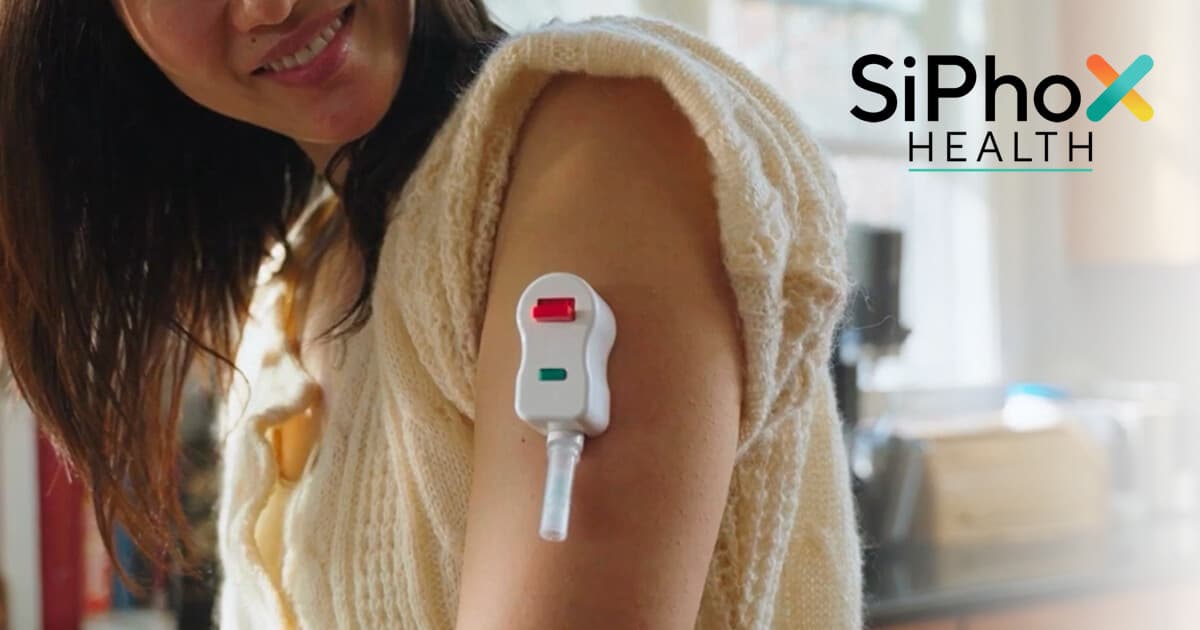
| SiPhox Health | You collect the sample yourself with the EasyDraw upper-arm device and mail it back | Membership starts at $124 plus shipping and handling and renews monthly, quarterly or every 6 months; the 60+ biomarker Ultimate 360 panel is +$125 per test |
| Labcorp OnDemand | The linked Comprehensive Health Test is collected in person at a Labcorp location; at-home kits apply to some other tests | $189 one-time for the Comprehensive Health Test; other tests are priced separately |
Sources, read November 10, 2026: Superpower, Mito, SiPhox, Labcorp OnDemand. Superpower uses a lab visit or a home phlebotomist, so it isn't a self-collection kit. These services aren't interchangeable just because all 4 involve bloodwork, and coverage differs by state: that day SiPhox listed Hawaii and New York as not covered, Mito listed its lab panels as unavailable in Hawaii and Rhode Island, and Superpower's FAQ listed 9 states it doesn't serve yet.

Compare the decision before the biomarker count
Ask what a proposed result would change. A panel can contain many reported values without answering the question that brought you to testing. A measured value, a calculated ratio and a proprietary score should not be counted as if they were identical clinical answers.
Get the full cost before you choose a subscription: the panel, any collection fee, add-ons, and the renewal price and date. How often to test, if at all, is a question for your clinician.

Labcorp OnDemand prices each test on its own page, so check the page for the exact test your clinician named.
Questions worth taking to the appointment
- What is the exact product, and what is known about its evidence and risks?
- Is there an appropriate clinical reason for the proposed test?
- Would the result change a decision or simply add another number?
- What would a normal result fail to rule out?
- What symptoms or circumstances would require medical attention rather than another consumer panel?
The goal is a clear, appropriate care plan. A lab dashboard can't make an uncertain product legitimate. Our diagnostic-platform guide, blood-testing buyer's guide and Labcorp comparison cover service selection while preserving that distinction.
Can bloodwork prove that a peptide is safe to use?
No. A normal result does not certify the identity, purity or sterility of an online product or rule out all risks. Even a panel advertising 100+ biomarkers has limits. A clinician can assess whether particular tests answer a relevant question, but a consumer dashboard is not a safety clearance for an unapproved peptide.
Did the October 30 policy make all peptides FDA-approved?
No. The October 30, 2026 Federal Register notice announced a draft HHS policy on enforcement discretion for 503A compounding with certain peptide bulk drug substances. It doesn't approve any peptide, and the notice says compounded drugs are not FDA-approved. The notice also says the draft isn't binding on HHS or the public. A policy change doesn't show that a wellness claim works or that a product is safe.
Which blood panel should someone using peptides buy?
There is no universal panel recommended here. A qualified clinician needs the exact product, circumstances and clinical question to decide whether testing is appropriate. Buying one large panel solely because it contains many biomarkers can leave the important question unanswered and does not establish that an unapproved product is safe.
Is Superpower the same kind of home test as SiPhox?
No. Superpower uses a draw at a Quest Diagnostics location or an at-home phlebotomist visit, which its panel page priced at +$119 on November 10, 2026. SiPhox ships an EasyDraw kit you use on your own upper arm and mail back, on a membership that starts at $124 plus shipping and handling. Compare the exact panel, state coverage, collection process and renewal terms before you choose.
The products this post references
The Longevity Gear Buyer's Checklist
The specs that actually decide whether a sauna, cold plunge, red light panel, or smart ring is worth it, plus the real price range for each. Get the free PDF, plus one weekly email on the gear worth buying.