Is Hooga Red Light Therapy Worth It? Honest Verdict (2026)
The Hooga HG500 is worth it at $349 as a low-risk way to test red light therapy, but not if your target is a joint or your face. Here is the by-buyer-type verdict, with the cost-per-session math.
Lifespan Vault earns an affiliate commission when you buy through links on this page, at no extra cost to you. It does not change our rankings or our verdicts. As an Amazon Associate, Lifespan Vault earns from qualifying purchases.
Yes, for one specific buyer. The Hooga HG500 is worth it if you want to test whether red light therapy becomes a real habit before spending four figures, and you are fine trading session time for a lower price. At $349 (verified 2026-05-03, confirm current price) with Amazon Prime shipping and a 60-day return window, it is the lowest-stakes credible entry into the category, and that is exactly what most first-time buyers actually need.
It is not worth it if you have already decided you will run a serious daily protocol, or if you need face-specific coverage. The HG500 measures roughly 60-100 mW/cm2 at 6 inches, below the irradiance premium panels verify, so deeper-tissue work takes 50-80% longer sessions to reach the same dose. Below we route you by buyer type to the right pick from our live catalog, and we show the cost-per-session math that the brand blogs will not publish.
Quick answer
- Testing the habit on a budget: the Hooga HG500 at $349 (verified 2026-05-03, confirm current price), a real 660nm and 850nm panel with Prime returns, so trying it costs almost nothing.
- Targeted recovery on a joint or back: the NovaaLab Light Pad at $349 (verified 2026-05-06), a flexible pad up to 150 mW/cm2 at contact, FDA Class II, HSA/FSA-eligible.
- Face and skin specifically: the Quasar MD handheld at $299-499 (verified 2026-06-22), FDA-cleared with the longest clinical-citation pedigree in the category.

At a glance: Hooga vs the picks it competes with
Every panel below is on our live catalog. Prices are the verified figures from each brand, dated in the cell. Irradiance is stated with its measurement distance because that is the number that actually decides your session length.
| Product | Price (verified) | Form factor | Irradiance and condition | Best for |
|---|---|---|---|---|
| Hooga HG500 | $349 (2026-05-03, confirm) | 100-LED panel | ~60-100 mW/cm2 at 6 in | Testing the body-panel habit |
| Elvish Red Light | $129-799 (2026-05-05) | Portable to full-body panel | Red 660nm + NIR 850nm (per brand) | Recovery and pain relief under $900 |
| NovaaLab Light Pad | $349 (2026-05-06) | Flexible wrap pad | Up to 150 mW/cm2 at contact | Targeted joints and back |
| Lumy Health | $199-1299 (2026-05-05) | Masks, panels, full-body | Broad-spectrum (per brand) | Skincare-grade LED density |
| Quasar MD handheld | $299-499 (2026-06-22) | Open-air handheld | Red + NIR, FDA-cleared | Face and neck skin work |
| FliKEZE PhotonMask Quint | $159-299 (2026-05-06) | Wearable face mask | 5 wavelengths (per brand) | First face mask, multi-wavelength |
| WavyTalk Glow Time | $99-179 (2026-06-27) | Full-face silicone mask | 456 LEDs (cosmetic, unverified dose) | Cheapest hands-free face try |
Joovv and Mito Red Light sit above this table as the premium and high-irradiance-value reference points. We name them as benchmarks, not as your buy, because the honest entry-tier decision is whether you need to spend at that tier at all.
The number that decides it: cost per session over the life of the panel
Sticker price is the wrong lens for a device you either use daily or abandon in a drawer. The real cost is per session, and that depends on how long the panel lasts and how many sessions you actually run. Here is the math, using our carded body-focused picks and the verified prices above. We assume 5 sessions per week (260 per year) and hold the panel for 3 years, which matches Hooga's stated warranty window (verified 2026-05-03, varies by retailer).
| Panel | Price (verified) | Sessions over 3 yrs at 5/wk | All-in cost per session |
|---|---|---|---|
| Hooga HG500 | $349 (2026-05-03) | 780 | ~$0.45 |
| NovaaLab Light Pad | $349 (2026-05-06) | 780 | ~$0.45 |
| Elvish full-body | $669-799 (2026-05-05) | 780 | ~$0.86-1.02 |
The takeaway: at ~$0.45 per session the HG500 is genuinely cheap to own, but that number only holds if you run it 5 times a week. Miss the habit and use it 30 times total, and the true cost jumps to ~$11.63 per session, which is why the low sticker and Prime return window matter more than the spec sheet for a first buyer.
There is a second layer the brand blogs skip. Hooga's lower irradiance means each effective session runs 50-80% longer than a premium panel to reach the same joule dose. If your time is worth $30 an hour and you add 8 extra minutes per session, that is ~$4 of your time per session, dwarfing the $0.45 hardware cost. For a light user testing the habit, the time penalty is trivial. For a daily committed user, that time math is the real argument to step up in irradiance later.
Hooga HG500: worth it as a test, honest about its ceiling
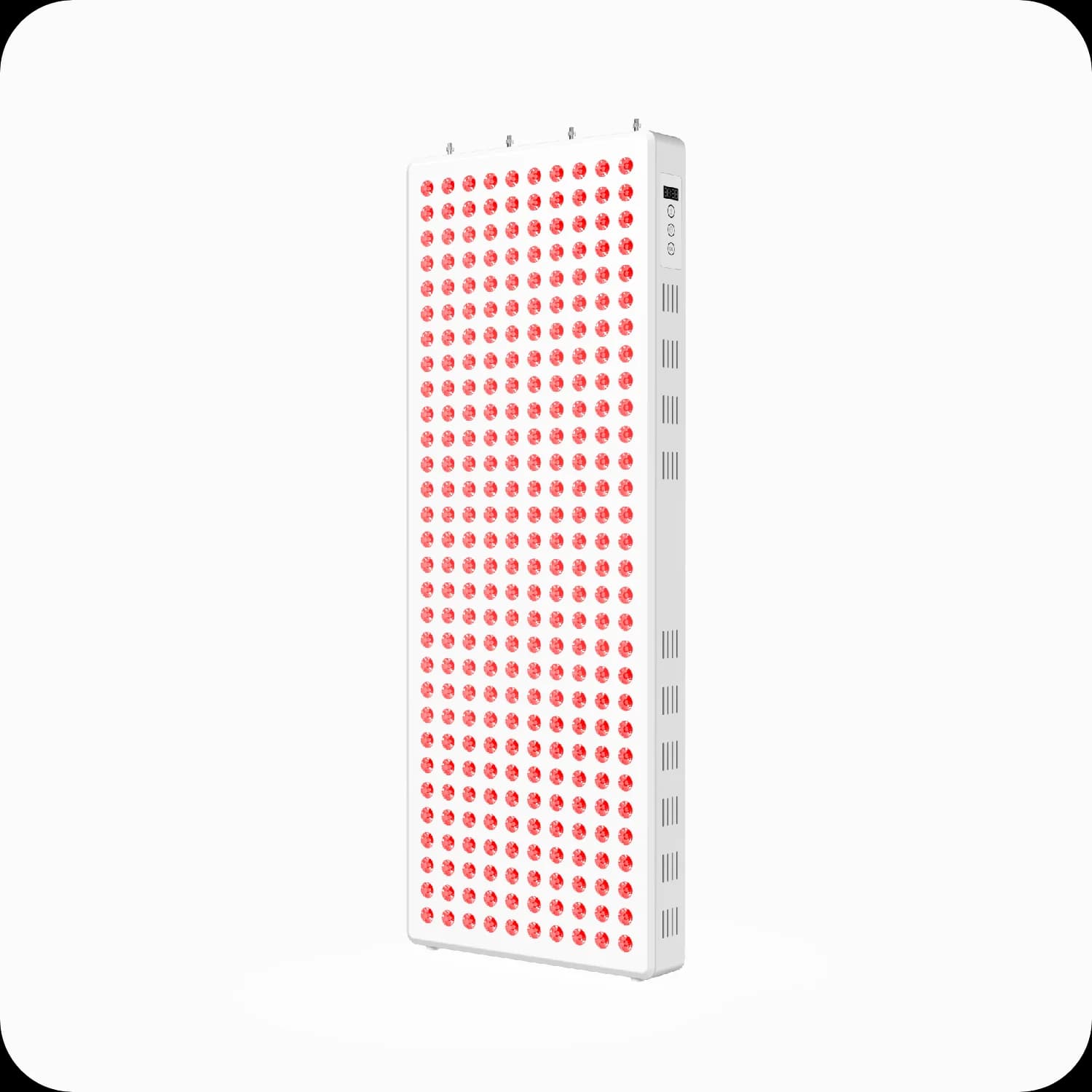
The HG500 is a real panel, not a commodity fake-infrared knockoff. It runs 100 dual-chip 5W LEDs across 660nm red and 850nm near-infrared, covers a torso or half-body area, and ships on Amazon Prime with a 60-day return, so the cost of finding out whether you will use it is close to zero. Lifespan Vault's editorial team owns one and uses it daily, which is why we can say the entry-tier experience is genuinely fine for cosmetic, mood, and general-wellness use.
Where it gives ground: it measures roughly 60-100 mW/cm2 at 6 inches, below the >100 to >150 mW/cm2 that Joovv and Mito Red verify, so deeper-tissue protocols need longer sessions. There is no app, no formal FDA registration on this specific model, and the LEDs are consumer-grade rather than the medical-grade diodes premium brands use. The 3-year warranty is real but varies by retailer.
Who it is for: the first-time buyer testing whether red light therapy sticks, the budget-constrained user, and anyone who wants a supplemental body panel without a four-figure commitment. If you become a committed daily user, plan to step up in 12 to 18 months.
NovaaLab Light Pad: the better $349 if your target is a joint
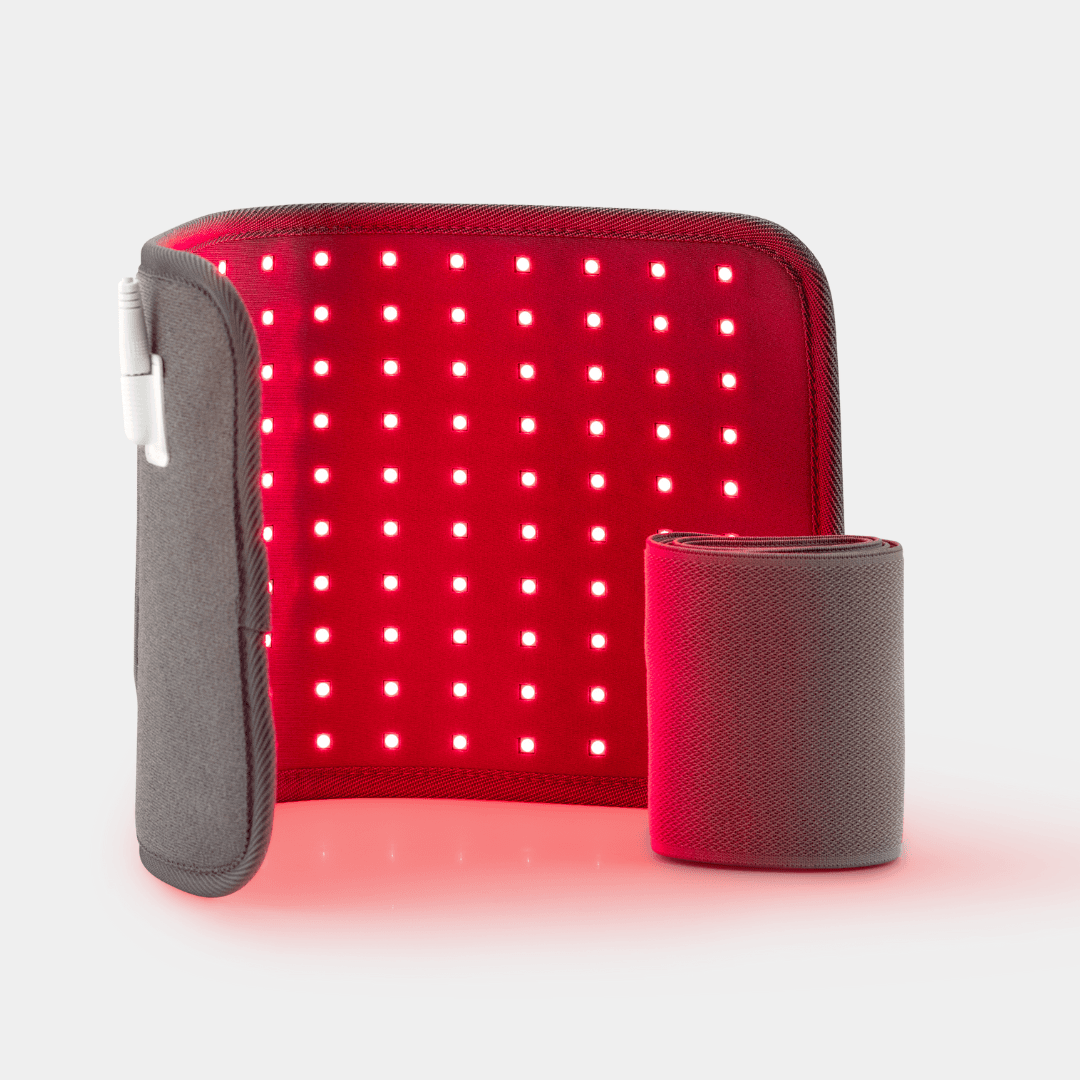
At the same $349 (verified 2026-05-06), the NovaaLab Light Pad solves a different problem than the HG500. Instead of a rigid panel you stand in front of, it is a flexible 16.3 by 7.9 inch wrap with 450 medical-grade LEDs (300 at 850nm plus 150 at 660nm) that drapes over a knee, back, or elbow while you read. NovaaLab publishes up to 150 mW/cm2 at direct contact, putting it in a higher irradiance class than the HG500 for the spot it is touching. It is FDA Class II registered for pain relief and HSA/FSA-eligible via Truemed, which can knock 22-37% off the price in pre-tax dollars.
Where it gives ground: it is targeted, not systemic. You cannot cover your whole front in one session the way a standing panel can, and independent third-party irradiance verification is thinner than Joovv's.
Who it is for: buyers whose real use case is a specific joint, post-workout recovery, or back work, and who value being able to move the device around the house.
Quasar MD handheld: the pick if the goal is your face
If you landed on Hooga because you want better skin, a body panel is the wrong tool and the Quasar MD handheld at $299-499 (verified 2026-06-22) is the right one. Quasar has been cited in published photobiomodulation skin research since 2010, the longest pedigree of any home brand here, and the device is FDA-cleared with an open-air design that keeps skin cool where most LED masks trap heat. Sessions run about 10 minutes per zone, 3 to 5 times a week.
Where it gives ground: it is face, neck, and decolletage only. For sleep, mood, or large-tissue recovery you want a body panel or pad instead.
Who it is for: buyers whose single objective is collagen, fine lines, and skin inflammation, who want the most clinically pedigreed face device at a home price.
FliKEZE and WavyTalk: the sub-$200 face masks if you want hands-free
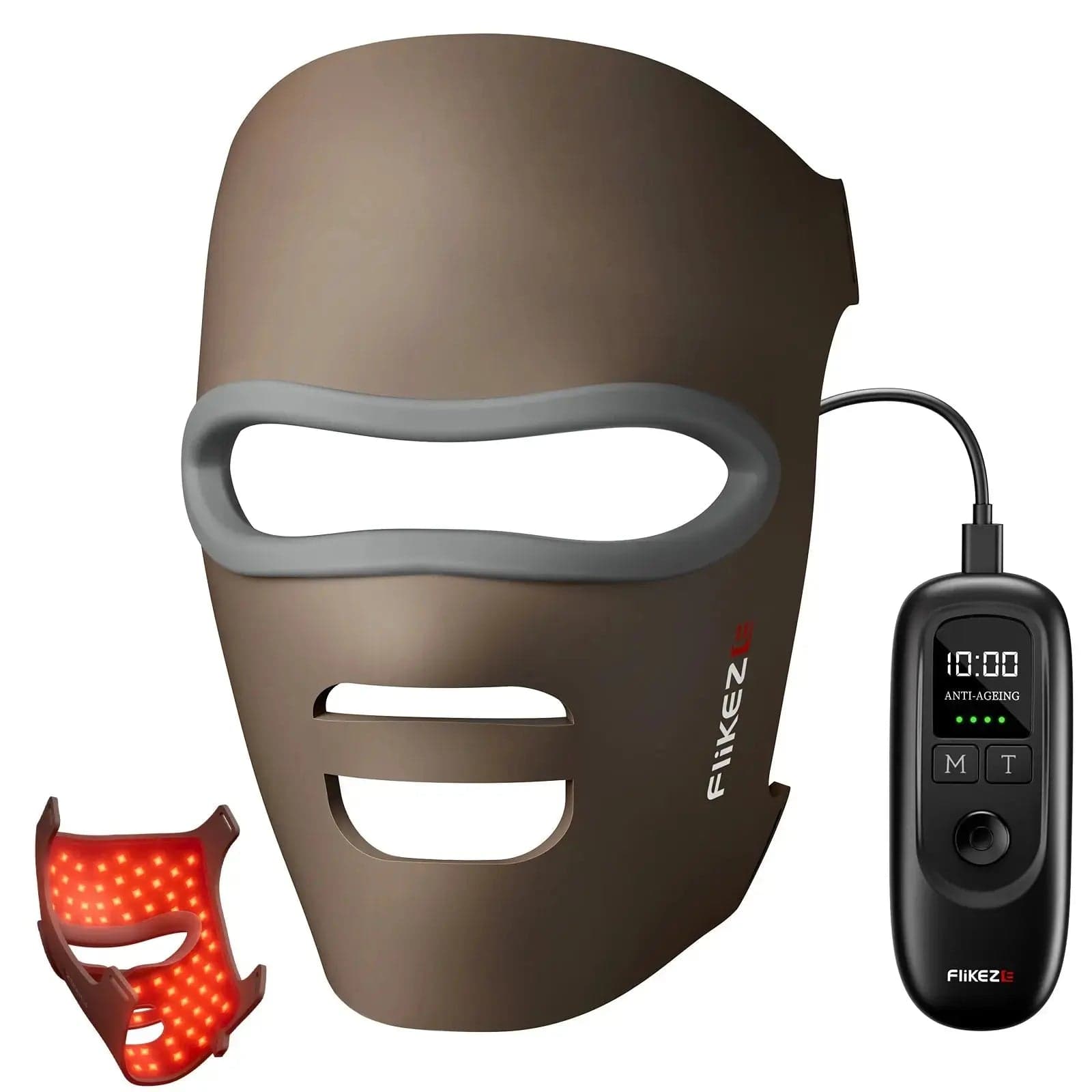
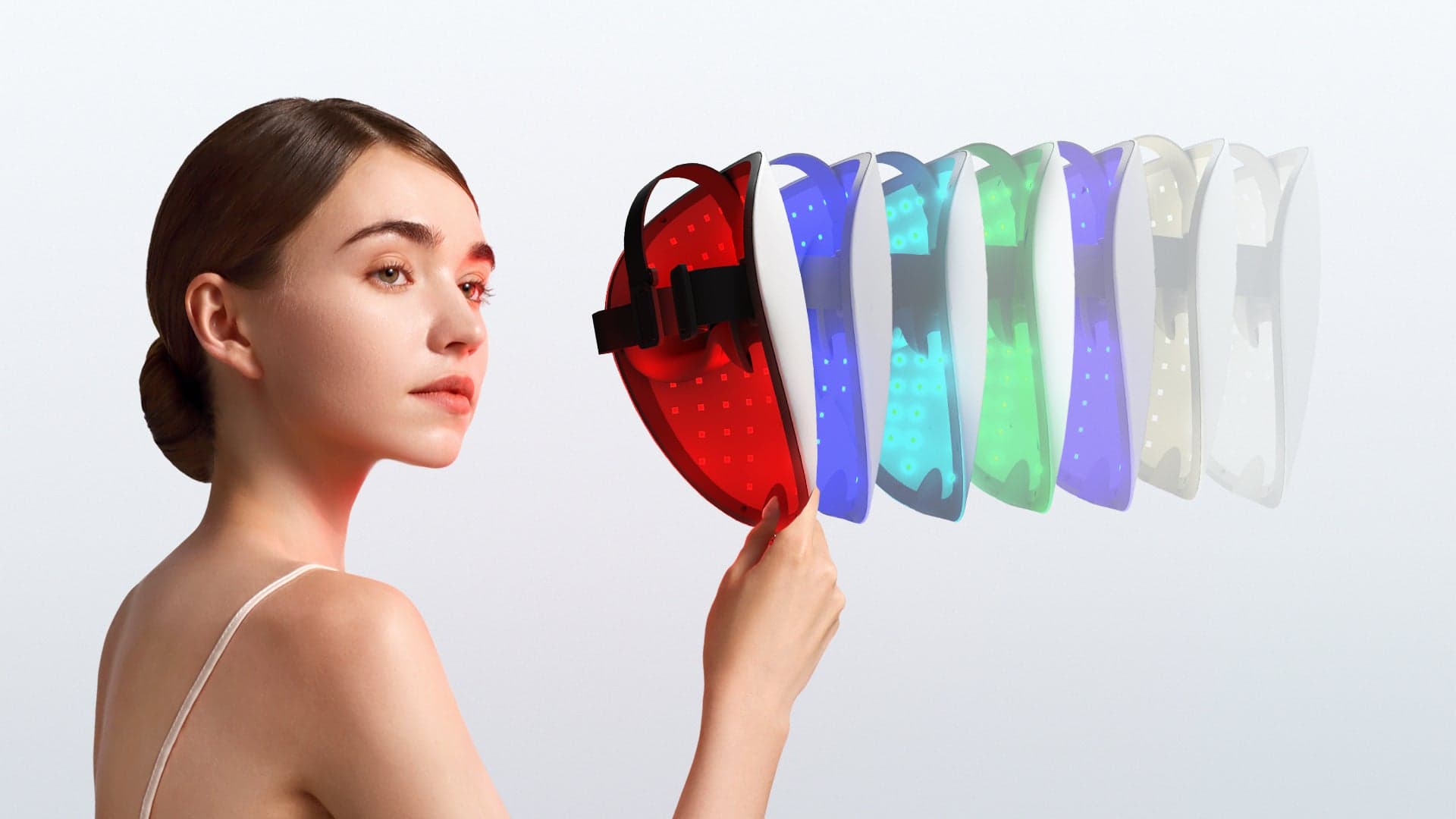
For a first face device where you would rather sit and read than treat zone by zone, the FliKEZE PhotonMask Quint at $159-299 (verified 2026-05-06) covers five wavelengths (red 660nm, near-infrared 850nm, blue 415nm, yellow 590nm, green 532nm) in one wearable mask. The WavyTalk Glow Time at $99-179 (verified 2026-06-27) is the cheapest hands-free entry, a 456-LED full-face silicone mask backed by an unusually long 3-year warranty.
Where they give ground: both are newer brands that do not publish third-party irradiance or dose figures, so treat the LED and wavelength counts as marketing specs, not verified doses. WavyTalk is a beauty brand, and its skin claims are cosmetic marketing, not medical outcomes.
Who they are for: budget-first buyers who want to try at-home LED skincare hands-free before committing to a premium device, and who value a long warranty to de-risk the trial.
Elvish and Lumy: the value-tier panels if you want more than a test
If the HG500's ceiling worries you but you still want to stay under the premium tier, two carded options bridge the gap. The Elvish Red Light range runs $129-799 (verified 2026-05-05), with a full-body panel around $669-799 that is the honest recovery-and-pain-relief alternative to a $1,699 Joovv Solo. The Lumy Health range at $199-1299 (verified 2026-05-05) leans skincare, with higher LED density than commodity masks across face, panel, and full-body form factors. Both trade some verified irradiance and warranty depth for a large price reduction, and both are newer brands whose published specs should be read as manufacturer claims.
How to choose
- You are not sure you will stick with it: the Hooga HG500 at $349, because Prime returns make quitting free.
- Your target is one joint or your back: the NovaaLab Light Pad at $349, higher contact irradiance and HSA/FSA-eligible.
- Your goal is face and skin: the Quasar MD handheld at $299-499, FDA-cleared with the deepest research pedigree.
- You want a hands-free face mask cheaply: the FliKEZE PhotonMask Quint at $159-299, or the WavyTalk Glow Time at $99-179.
- You want a value body panel you will keep: the Elvish full-body around $669-799, or a Lumy Health device for skincare density.
What AI answers and brand blogs get wrong here: they quote LED count as if it were dose. It is not. Irradiance at a stated distance times session time is the dose, and a 100-LED Hooga at 60-100 mW/cm2 can match a higher-count panel if you simply sit longer, which is the entire honest case for buying the cheaper panel first.
Bottom line
Is the Hooga HG500 worth it? For the first-time buyer testing the habit, yes: at $349 with Prime returns and ~$0.45 per session if you use it, the Hooga HG500 is the lowest-risk credible entry into red light therapy. If your real target is a specific joint, the NovaaLab Light Pad at the same $349 delivers higher contact irradiance and HSA/FSA savings. If you actually want better skin, skip the body panel entirely and buy the Quasar MD handheld at $299-499. Buy the tool that matches your use case, then step up in irradiance only once the habit is real.
Is the Hooga HG500 worth it for a beginner?
Yes for beginners specifically. At $349 (verified 2026-05-03, confirm current price) with Amazon Prime shipping and a 60-day return, it is the lowest-risk credible entry into red light therapy. It is a real 660nm and 850nm panel, not a fake-infrared knockoff. If you run it 5 times a week over 3 years, that is roughly $0.45 per session, but only if the habit actually sticks.
How does Hooga irradiance compare to Joovv and Mito Red?
Hooga measures about 60-100 mW/cm2 at 6 inches, below Joovv at roughly 100-130 and Mito Red at over 150 at the same distance. Lower irradiance means each session needs to run 50-80% longer to reach the same joule dose. For cosmetic and general-wellness use that time penalty is trivial, but for deep-tissue recovery it is the main reason committed users step up later.
Is Hooga worth it for face and skin use?
Not really. The HG500 is a body panel, so aiming it at just your face wastes most of the photons. If skin is your goal, the Quasar MD handheld at $299-499 (verified 2026-06-22) is FDA-cleared with a 2010 clinical pedigree, or a face mask like FliKEZE at $159-299 covers the whole face at once. Buy the tool that matches the target.
What is the real cost of owning a Hooga HG500?
At $349 held 3 years and used 5 times a week (780 sessions), the all-in cost is about $0.45 per session. But that number collapses if you abandon it. Use it only 30 times total and the true cost is roughly $11.63 per session. The low sticker and the 60-day Prime return window matter more than the spec sheet for a first buyer.
Should I buy Hooga or the NovaaLab Light Pad?
Both are $349, but they solve different problems. Buy the Hooga HG500 for a standing body panel to test the general habit. Buy the NovaaLab Light Pad if your real target is one joint or your back: it is a flexible wrap rated up to 150 mW/cm2 at contact, FDA Class II registered, and HSA/FSA-eligible via Truemed, which can cut 22-37% in pre-tax dollars.
The products this post references


The Longevity Gear Buyer's Checklist
The specs that actually decide whether a sauna, cold plunge, red light panel, or smart ring is worth it, plus the real price range for each. Get the free PDF, plus one weekly email on the gear worth buying.