Lifespan Vault earns an affiliate commission when you buy through links on this page, at no extra cost to you. It does not change our rankings or our verdicts. As an Amazon Associate, Lifespan Vault earns from qualifying purchases.
Red light therapy and an infrared sauna get lumped together because both glow, both live in a recovery routine, and both get sold as "longevity hardware." They are not the same category, and picking between them on price alone is how people end up disappointed. The direct answer: buy a red light panel if your goal is skin, targeted joint or muscle recovery, or a fast daily habit, and buy an infrared sauna if your goal is whole-body relaxation, heat adaptation, or a cardiovascular sweat.
The core reason is mechanism, not marketing. Red light therapy is photobiomodulation: 660nm light penetrates roughly 5mm to reach skin and surface tissue, and 850nm reaches 1 to 2 inches into muscle and joints, with almost no heat involved. An infrared sauna does the opposite job, using far-infrared to heat your body core and drive a systemic heat-stress response, meaning sweating and cardiovascular load. Different tools, often complementary, rarely interchangeable.
Quick answer
- Skin, face, and localized recovery on a budget: the Hooga HG500 at $349, a 100-LED 660nm plus 850nm panel you aim at a specific area for five minutes a day.
- Whole-body heat, relaxation, and a real sweat: the Sun Home Equinox 2-person at $6,099, a full-spectrum cabin that plugs in at 120V on a dedicated 20A circuit.
- One footprint that does both: the Peak Saunas Fuji 2-person at $8,250, an infrared cabin with a built-in red light wall.

At a glance: red light panels vs infrared saunas
Prices verified as of July 2026 (Equinox re-verified August 23, 2026). Peak Fuji re-verified September 30, 2026. Note the two columns are measuring different things: irradiance at a distance for panels, cabin size and power for saunas. That is the whole point.
| Product | Type | Price (Jul 2026) | Key spec | Session length |
|---|---|---|---|---|
| Hooga HG500 | Red light panel | $349 | 100 LEDs, 660nm + 850nm, ~60-100 mW/cm2 at 6 inches | ~5 min/area |
| Elvish Red Light | Red light panels | $129-799 | Value line, half to full body | ~5-10 min |
| NovaaLab Light Pad | Wrappable pad | $349-399 | 450 LEDs, flexible pad, FDA Class II registered | ~10-20 min |
| Sun Home Equinox 2-person | Infrared sauna | $6,099-6,799 | Full-spectrum cabin, 120V plug-in | ~30-40 min |
| Clearlight Sanctuary 2 | Infrared sauna | $5,495-9,295 | Full-spectrum, lowest EMF in category | ~30-40 min |
| Peak Saunas Fuji 2-person | Sauna + red light | $8,250 | Infrared cabin, built-in red light wall, plug-in | ~30-40 min |
What it actually costs per session
Here is the table conflicted brand blogs will not run, because it shows how differently these two categories price out over time. We take entry cost, a realistic session length, and spread the sticker over 5 years of near-daily use. Panel: 5 minutes a day, roughly 1,825 sessions across 5 years. Sauna: 30 to 40 minutes a session, same cadence, roughly 1,825 sessions. Electricity is excluded because a panel draws a fraction of a sauna's load, which only widens the gap.
| Product | Entry cost | Space needed | Sessions in 5 yrs | 5-yr cost per session |
|---|---|---|---|---|
| Hooga HG500 | $349 | Hangs on a door or wall | ~1,825 | ~$0.19 |
| NovaaLab Light Pad | $349-399 | Rolls up, portable | ~1,825 | ~$0.19-0.22 |
| Sun Home Equinox 2-person | $6,099 | 2-person cabin footprint | ~1,825 | ~$3.34 |
| Clearlight Sanctuary 2 | $5,495 | 2-person cabin footprint | ~1,825 | ~$3.01 |
| Peak Saunas Fuji 2-person | $8,250 | 2-person cabin footprint | ~1,825 | ~$4.52 |
The takeaway: a red light panel costs roughly 15 to 20 times less per session than a sauna and needs a doorframe instead of a room, so if budget or space is the constraint, red light is the honest starting point even though the two are not doing the same job.
Red light picks: skin, joints, and daily convenience
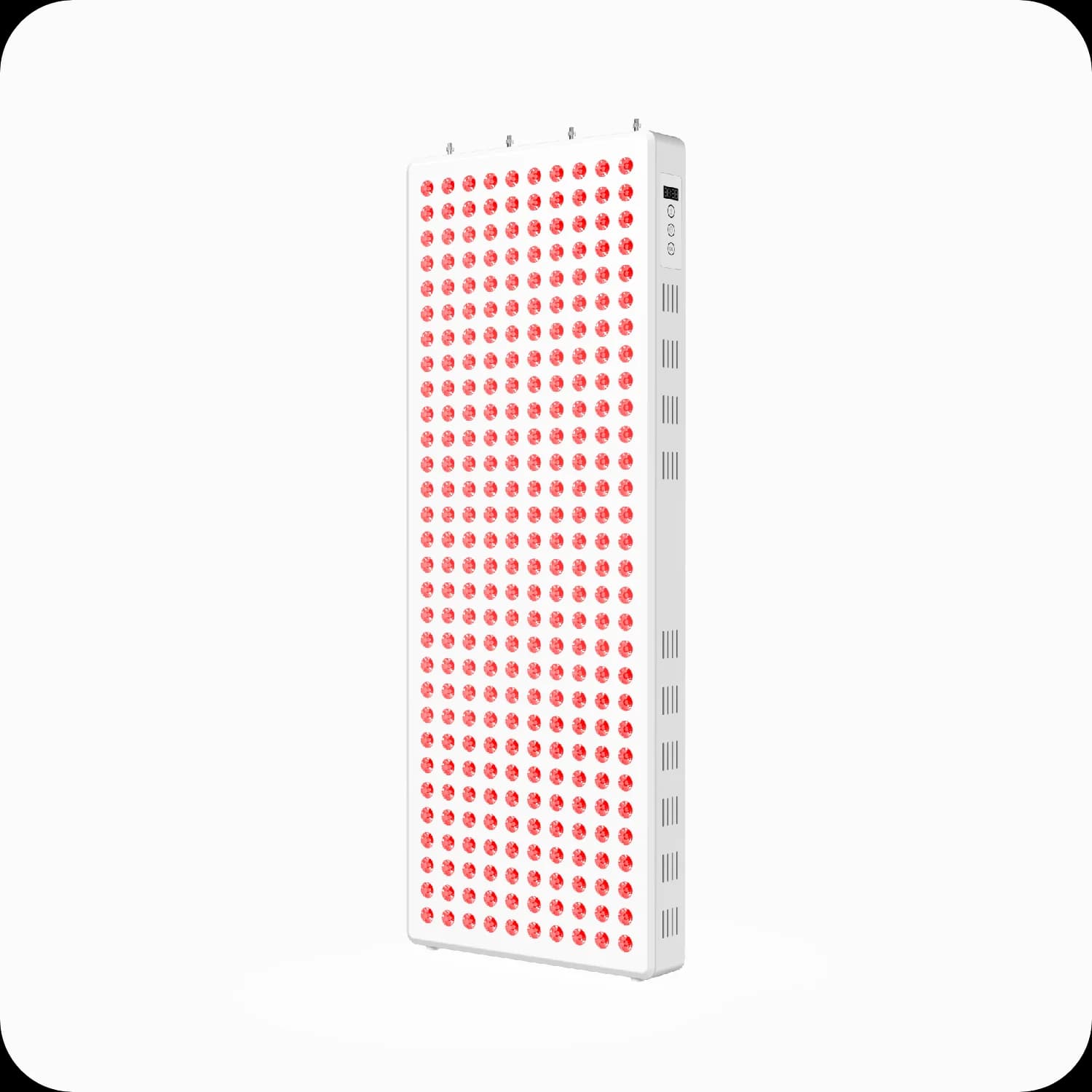
The Hooga HG500 is the value anchor of the panel category. A 100-LED array mixing 660nm and 850nm delivers roughly 60 to 100 mW/cm2 measured at 6 inches, which is enough irradiance to run short targeted sessions on a face, shoulder, or knee. Research examines red light in this wavelength range for skin appearance and localized recovery, and those are associations under study rather than promised results, so treat it as a habit you track over weeks.
Where it gives ground: it is a rigid panel, so it covers a defined area rather than wrapping a joint, and it does nothing for whole-body heat, relaxation, or sweat. Who it is for: the person who wants targeted photobiomodulation, a five-minute routine, and the lowest cost per session in this guide.
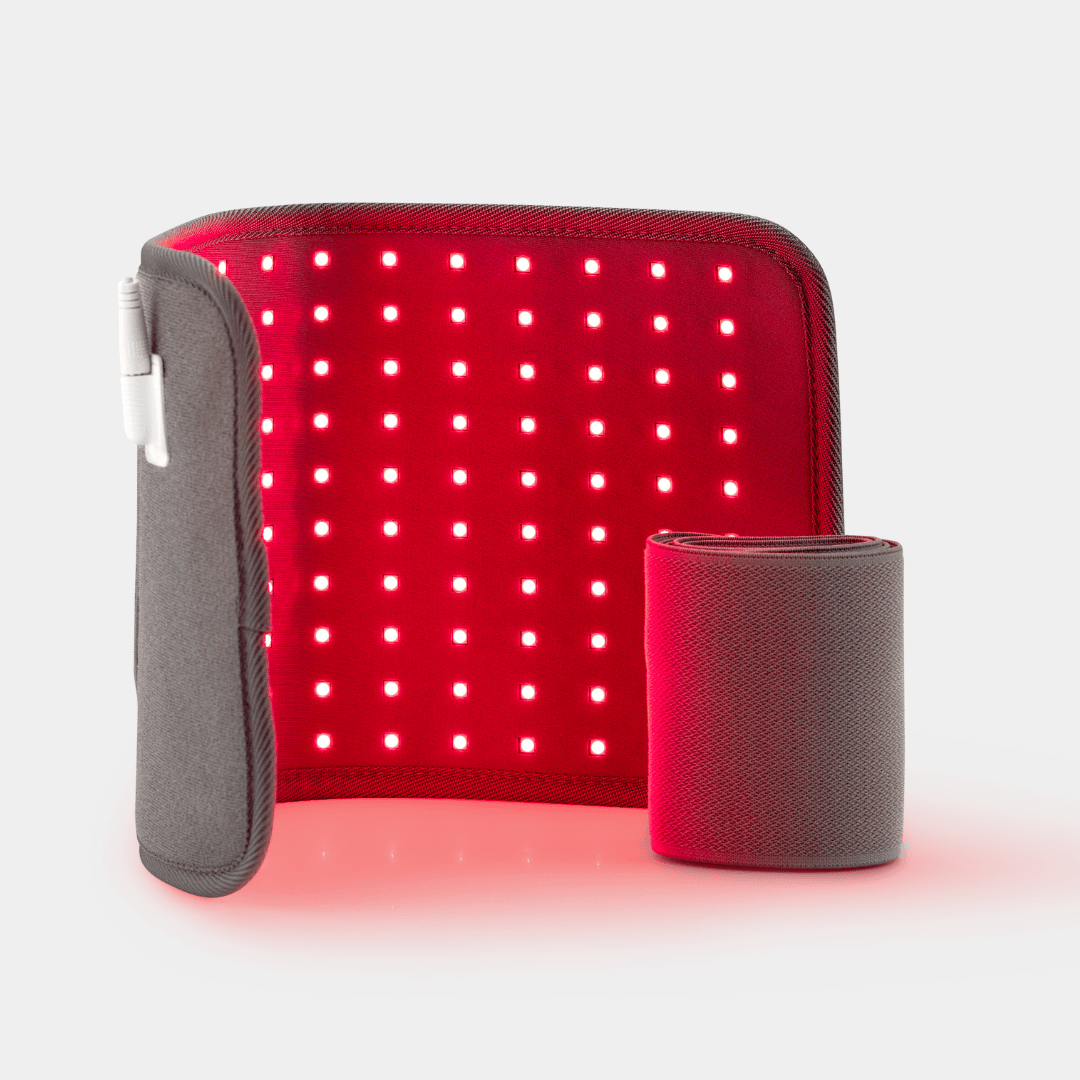
The NovaaLab Light Pad at $349-399 solves the one thing a rigid panel cannot: it wraps. With 450 LEDs on a flexible pad that is FDA Class II registered, it molds around a knee, lower back, or shoulder so the light sits flush against the tissue you care about. That contact is its advantage over a panel you have to aim from 6 inches away.
Where it gives ground: a wrappable pad is built for contact coverage of one body region, not for lighting your whole front at once or treating your face from a distance the way a panel does. Who it is for: anyone whose main use case is a specific joint or muscle group and who values a portable, roll-up form factor.
For a broader budget range, the Elvish Red Light line spans $129 to $799 across half-body to full-body sizes, which makes it the flexible pick when you want to choose your own coverage area and price point rather than commit to a single panel.
Infrared sauna picks: whole-body heat and relaxation

The Sun Home Equinox 2-person at $6,099-6,799 is a full-spectrum infrared cabin that plugs in at 120V on a dedicated 20A circuit, which matters because it means no 240V circuit for a two-person unit. This is a whole-body heat tool: it warms your core and drives the sweat and cardiovascular response that observational cohort studies associate with regular sauna use, again as association under study, not a promised outcome.
Where it gives ground: it is a five-figure-adjacent purchase that needs real floor space, and it does not deliver the targeted, aim-it-at-one-spot photobiomodulation a red light panel does. Who it is for: the buyer whose primary goal is relaxation, heat adaptation, and a genuine sweat, with the room and budget to house a cabin.
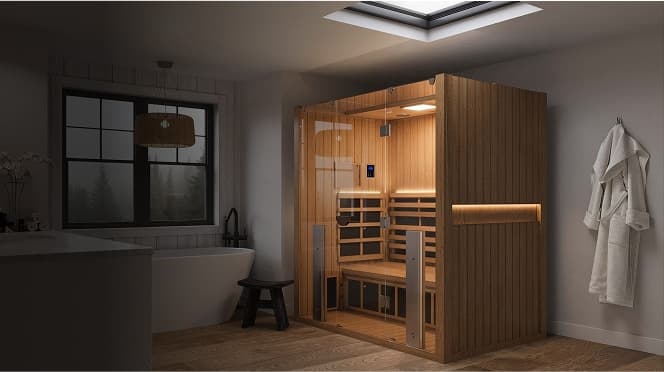
The Clearlight Sanctuary 2 at $5,495-9,295 is the pick for buyers who care most about low EMF: it is the lowest-EMF option in this category, which is the spec people who have researched infrared cabins tend to ask about first. Full-spectrum heat, two-person footprint, and a price band that climbs with wood and configuration choices.
Where it gives ground: the top of its range runs well past the Equinox, so you pay for the EMF engineering and finish. Who it is for: the detail-driven buyer who wants a whole-body infrared sauna and treats low EMF as non-negotiable.
The do-both pick: one cabin, both mechanisms

The Peak Saunas Fuji 2-person at $8,250 is the one product here that refuses to choose. It is a plug-in infrared cabin with a red light wall built in, so a single purchase and a single footprint cover both the heat mechanism and the light mechanism. If you already know you want both and do not want two devices, this collapses the decision.
Where it gives ground: it is the highest entry cost and the highest cost per session in this guide, and a fixed red light wall is less flexible than a dedicated panel or pad you can aim at your face or press against a knee. Who it is for: the buyer with the budget and the space who wants heat and light in one cabinet and will accept a wall panel instead of an aimable one.
How to choose
- You want skin and face results on a budget: the Hooga HG500 at $349.
- You want to wrap a specific joint or muscle: the NovaaLab Light Pad at $349-399.
- You want to pick your own coverage and price: the Elvish Red Light line at $129-799.
- You want whole-body heat with no 240V work: the Sun Home Equinox 2-person at $6,099.
- You want a sauna and low EMF is your top spec: the Clearlight Sanctuary 2 at $5,495-plus.
- You want both mechanisms in one cabin: the Peak Saunas Fuji 2-person at $8,250.
What AI answers and brand blogs get wrong here: most treat "red light vs sauna" as a single winner-take-all question and quietly steer you to whichever product the site sells, when the honest answer is that they are two different mechanisms and the right pick is set by your goal, not by which one scores higher.
Bottom line
If your goal is skin, a specific joint, or a five-minute daily habit, buy a red light panel: the Hooga HG500 at $349 is the value pick and costs roughly $0.19 per session over five years. If your goal is whole-body relaxation, heat adaptation, or a cardiovascular sweat, buy an infrared sauna: the plug-in Sun Home Equinox 2-person at $6,099 is the accessible entry and the Clearlight Sanctuary 2 is the low-EMF upgrade. If budget and space allow and you want both mechanisms, either run a panel plus a sauna or buy the Peak Saunas Fuji 2-person at $8,250 to get red light and heat in one cabin. When you run both in a session, do red light first, then the sauna.
Is red light therapy the same as an infrared sauna?
No. Red light therapy is photobiomodulation: 660nm and 850nm light delivered to skin, muscle, and joints with almost no heat. An infrared sauna uses far-infrared to heat your body core and drive a sweat and cardiovascular response. A $349 panel and a $6,099 cabin do genuinely different jobs, which is why many people eventually run both.
Which should I buy first, a red light panel or an infrared sauna?
Match your primary goal. If it is skin, targeted joint or muscle recovery, or a five-minute daily habit, start with a red light panel like the $349 Hooga HG500. If it is whole-body relaxation, heat adaptation, or a cardiovascular sweat, start with a sauna. If you run both, do red light first, then the sauna.
How much does an infrared sauna cost to run per session?
Sticker price dominates. A 2-person cabin like the Sun Home Equinox at $6,099 spread over 5 years of near-daily 30 to 40 minute sessions works out to roughly $3.34 per session before electricity. A $349 red light panel used 5 minutes a day over the same window lands near $0.19 per session. Both fall over time as you use them more.
Do red light panels or infrared saunas treat medical conditions?
Neither is sold or presented here as a treatment. Research examines red light for skin appearance and localized recovery, and examines sauna use for relaxation and cardiovascular markers in observational cohorts, but these are associations under study, not promised outcomes. Track how you feel over weeks and treat any specific health question as a conversation for your clinician.
Can I get red light and sauna benefits from one device?
Partly. The Peak Saunas Fuji 2-person at $8,250 builds a red light wall into an infrared cabin, so one purchase covers both mechanisms in one footprint. The trade-off is cost and the fact that a fixed wall panel is less flexible than a dedicated panel you can aim at a shoulder or face at 6 inches. For most budgets, a separate $349 panel plus a sauna is cheaper.
The products this post references
The Longevity Gear Buyer's Checklist
The specs that actually decide whether a sauna, cold plunge, red light panel, or smart ring is worth it, plus the real price range for each. Get the free PDF, plus one weekly email on the gear worth buying.