Pulsetto vs Apollo Neuro: 2026 Stress Wearable Comparison
One is a 4-minute electrical neck ritual starting at $269. The other is a wear-it-through-the-day vibration wearable at $448. The honest comparison, including the cost-of-ownership math neither brand publishes.
Lifespan Vault earns an affiliate commission when you buy through links on this page, at no extra cost to you. It does not change our rankings or our verdicts.
Pulsetto and Apollo Neuro are the two most-searched wind-down wearables of 2026, and they attack the same problem from opposite ends. Pulsetto is a $269 to $296 neck collar that delivers short electrical vagus-nerve stimulation sessions, 4 to 10 minutes and done. Apollo Neuro is a $448 wrist or ankle wearable that runs gentle vibration patterns for hours at a time, more background hum than ritual.
The direct answer: buy the Pulsetto if you want a short, deliberate daily wind-down ritual at the lower entry price, and buy the Apollo Neuro if you want passive, wear-it-through-the-day calming with zero consumables. Both run the same 30-day money-back window, so returns are a wash. One caveat before either: the independent evidence for both devices is early and mixed, the headline studies are company-linked, and both are general wellness devices, not medical treatments. Plan to judge either one against your own sleep and stress data inside that return window.
Quick answer
- Ritual builders: the Pulsetto at $269, a hands-free 4 to 10 minute daily session that is easy to keep as a habit.
- Passive, wear-all-day users: the Apollo Neuro at $448, worn through much of the day (Apollo recommends at least 3 hours a day, 5 days a week) while its vibration patterns run in the background.
- Buyers who hate consumables: the Apollo Neuro at $448, no gel and no electrodes, just charge and wear.
At a glance
| Pulsetto | Apollo Neuro | |
|---|---|---|
| Price (verified July 2026) | $269 Lite / $296 Fit | $448 bundle (includes 1-yr SmartVibes; $349 promo not active) |
| Mechanism | Non-invasive electrical vagus-nerve stimulation at the neck | Low-frequency cutaneous vibration at wrist, ankle, or arm, or clipped to clothing |
| Session style | 4 to 10 minutes; ~4 minutes daily recommended | Worn through the day; Apollo recommends 3+ hrs/day, 5 days/week |
| Battery | Up to 10 days (Lite) / 12 days (Fit), USB-C | ~8 hours per charge (continuous use) |
| Consumables | Conductive gel, $51 for a 4-tube box (4 to 6 month supply) | None |
| Subscription | None required; 5 programs free for life, optional Premium $15/mo | SmartVibes ~$99/yr, first year bundled, required to use |
| Returns and warranty | 30-day money-back, 2-year warranty | 30-day money-back |
Both slot into the same corner of a recovery stack, and neither replaces a tracker: they are actuators, not sensors, so pairing one with an Oura, Whoop, or Apple Watch is how you actually find out whether it moves your numbers. Our Apple Watch sleep-tracking teardown covers that measurement side.
Pulsetto: the 4-minute neck ritual
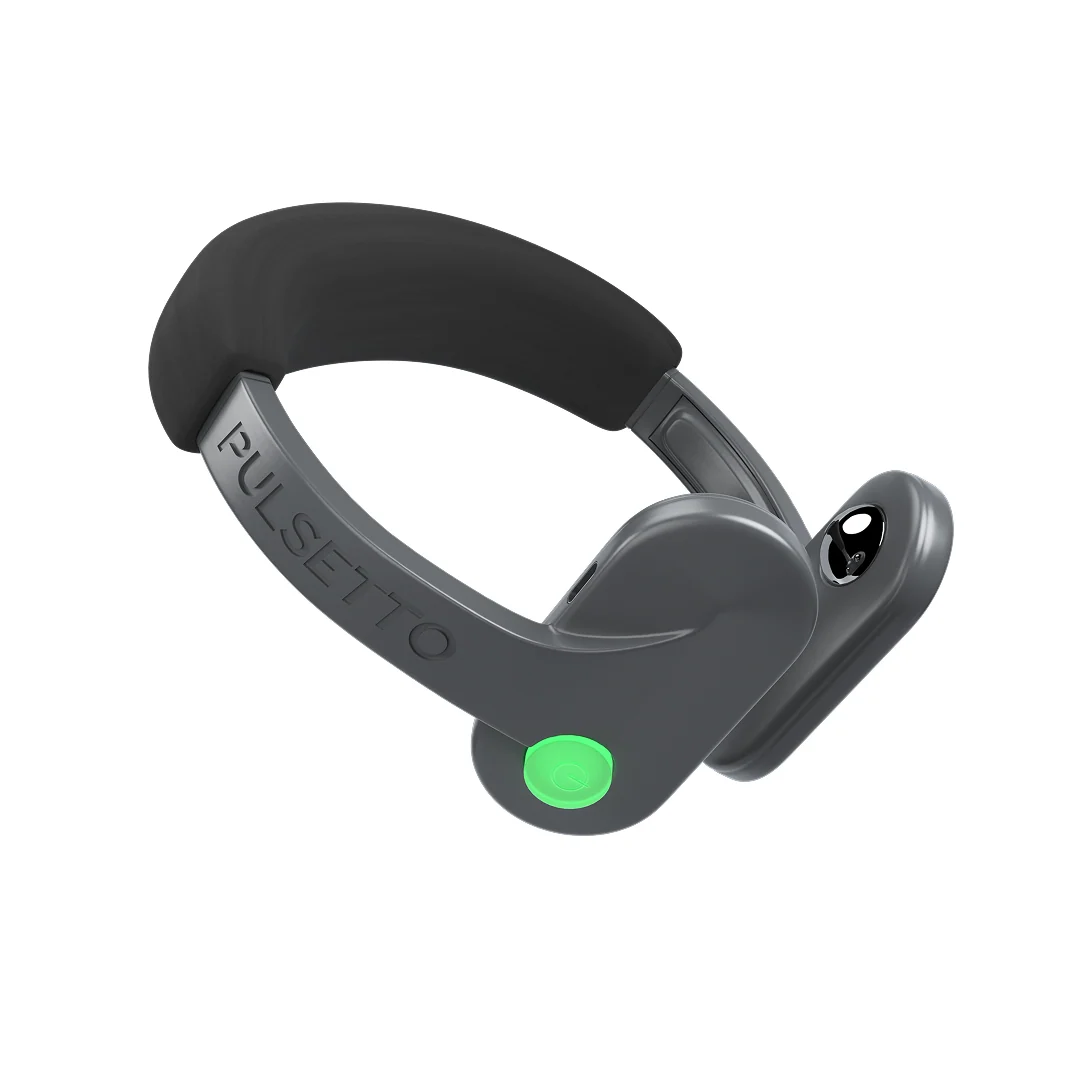
Pulsetto is a soft collar that sits at the base of your neck. You apply a thin layer of conductive gel, pick a program in the Bluetooth app, and it runs a 4 to 10 minute stimulation session hands-free. Five programs are free for life; a Premium tier at $15 a month adds three more plus meditations, and you do not need it to use the device daily. Battery is a genuine strength: up to 10 days on the $269 Lite and about 12 on the $296 Fit, charging over USB-C. Hardware carries a 2-year warranty plus a 30-day money-back window.
One shopping note: Pulsetto's site shows compare-at figures of $469 on the Lite and $546 on the Fit. Those are standing funnel anchors, not real market prices. The real prices, verified from Pulsetto's own store data in July 2026, are $269 and $296.
Where it gives ground: the gel is a real recurring cost, a $51 box of four 60g tubes that Pulsetto rates as a four to six month supply, so about $102 to $153 a year at daily use, which quietly adds a second purchase price over time. The best app content sits behind the optional Premium tier. And the headline stress and sleep statistics come from a small company-linked study of roughly 40 people over 4 weeks, not large independent trials.
Verdict by buyer: right for the person who keeps habits when they are short and scheduled, and who wants the lower entry price. Wrong for the person who resents consumables or wants proven outcomes per dollar.
Apollo Neuro: the passive all-day option
Apollo Neuro is worth naming as the benchmark even though it takes the opposite approach. It is an actuator you wear on your wrist, ankle, or arm, or clip to your clothing, and it runs low-frequency vibration patterns from the SmartVibes library (Energy, Social, Focus, Recover, Calm, Unwind, and Fall Asleep). There is no gel, no electrodes, and no short session to remember: Apollo recommends at least 3 hours a day, 5 days a week, including overnight, with the patterns running in the background. The pedigree is the strongest in this thin category. Apollo grew out of neuroscience and psychiatry research at the University of Pittsburgh, led by co-founder Dr. David Rabin, and spun out in 2018; the wearable has shipped since January 2020.
The $448 bundle (verified July 2026; the often-quoted $349 promo is not currently active) includes one year of the SmartVibes membership, which renews at about $99 a year. Apollo states the wearable requires an active membership to work, so that $99 is an ongoing cost, not optional. A hardware refresh is visibly imminent: the Apollo 2.0 with SmartVibes was listed for pre-order at $449 as of July 2026, which is worth knowing before paying full price for current-generation hardware.
Where it gives ground: it is open-loop. The wearable has no sensors of its own, so it does not read your physiology and adapt, you just pick a Vibe. Battery is about 8 hours per charge against Pulsetto's 10 to 12 days. Compliance is the known failure mode: it only has a chance of doing something if you actually wear it most of the day, and strap durability draws frequent owner complaints. Consumable-free ownership is the practical upside at this price.
Verdict by buyer: right for the person who will not keep a daily ritual but will wear a device through the day, and for anyone who would rather not deal with gel or electrodes. Wrong for the person who wants tracking, biofeedback, or a sub-$300 entry point.
The evidence, read honestly
This category demands a plain caveat, so here it is. Independent research on both approaches is early and mixed. Pulsetto's stress and sleep numbers come from a small company-linked study of about 40 participants over 4 weeks. Apollo's most-cited support is a 2022 study in the European Journal of Applied Physiology of 22 University of Pittsburgh athletes, which found the vibrations each rated most calming were associated with higher parasympathetic HRV, particularly in those most taxed by exercise, a small associational result the company itself frames as suggestive. Neither device is FDA-cleared to treat any condition; both are sold as general wellness devices, and effects are subjective, with some users noticing clear shifts and others nothing. The practical protocol: pick one, wear it consistently, watch your own HRV and sleep data, and use the money-back window (30 days for both) as your real trial.
The cost-of-ownership math neither brand publishes
Sticker price is misleading in both directions here, so here is the math in the open, dated July 2026, assuming daily use.
| Cost line | Pulsetto Lite | Apollo Neuro |
|---|---|---|
| Hardware | $269 | $448 |
| Year-1 consumables (gel) | ~$102 to $153 | $0 |
| Year-1 subscription | $0 required | $0 (first year bundled) |
| Year-1 total | ~$371 to $422 | $448 |
| Years 2 and 3, each | ~$102 to $153 gel | ~$99 SmartVibes (required) |
| 3-year total | ~$575 to $728 | ~$646 |
The honest read is that neither wins cleanly for a daily user. Pulsetto starts $179 cheaper on hardware, and its gel is lighter than most assume: a $51 box of four tubes that Pulsetto rates as a four to six month supply. Over three years Pulsetto lands somewhere around $575 to $728 depending on how much gel you burn, against Apollo's roughly $646 with its required membership. Heavy daily gel users pay a little more with Pulsetto; lighter users pay less. Most listicle answers rank these two on sticker price alone, but the ongoing costs, gel on one side and a mandatory membership on the other, are what actually decide it.
How to choose
- You keep short, scheduled habits: the Pulsetto at $269, 4 minutes a day is an easy floor.
- You will wear a device through the day but will not run a ritual: the Apollo Neuro at $448.
- You use it daily and think in 3-year costs: it is close, roughly $646 for Apollo versus about $575 to $728 for Pulsetto depending on gel use.
- You use it a few times a week on a budget: Pulsetto, where lighter use keeps gel costs low.
- You hate consumables and recurring gel: Apollo, with no gel or electrodes to buy.
- You have not built the measurement layer yet: start with a tracker from our longevity wearables guide first, then add an actuator.
- Your wind-down problem is really a bedroom problem: a weighted blanket at a fraction of the price is the boring answer worth trying before either.
For the wider category, including percussion, compression, and the rest of the stack, see the full recovery tech guide.
Bottom line
Pulsetto and Apollo Neuro are two honest bets on the same early science, packaged as opposite habits: a 4-minute electrical neck ritual at $269 to $296 versus a wear-it-through-the-day vibration wearable at $448. Pulsetto wins on entry price, battery, and habit design; Apollo wins on consumable-free ownership and simplicity, while on three-year cost for a daily user the two are roughly even. Neither has definitive independent evidence, so buy whichever habit you will actually keep and let your own HRV and sleep data render the verdict inside the 30-day return window. There is no absolute winner here, only a right fit per buyer. If neither habit fits and you want the wider field, our vagus nerve stimulation device guide covers the rest of the category, and the best recovery tech guide covers the muscle-and-tissue side of recovery these two deliberately skip.
- Ryan, Founder
Which is better for sleep, Pulsetto or Apollo Neuro?
Neither has definitive independent sleep evidence, so choose by ritual. Pulsetto is a deliberate 4 to 10 minute pre-bed session at the neck, done and off. Apollo runs a Sleep vibration pattern you can wear through the night at the wrist or ankle. If you fall asleep faster with a fixed wind-down routine, Pulsetto fits; if you want something passive, Apollo does.
Does Pulsetto require a subscription?
No. Five app programs are free for life, and an optional Premium tier at $15 a month adds three more plus meditations. The recurring cost that actually matters is conductive gel. Pulsetto sells it as a $51 box of four 60g tubes that it rates as a four to six month supply, so at daily use you spend roughly $102 to $153 a year on gel before you touch any subscription.
Does Apollo Neuro have a subscription fee?
The $448 hardware bundle includes one year of the SmartVibes membership, which then renews at about $99 a year. Apollo states the wearable requires an active membership to work, so treat the $99 as an ongoing cost after year one, not an optional add-on. Apollo has no consumables, though, unlike Pulsetto's gel.
Is there real science behind Pulsetto and Apollo Neuro?
The independent evidence is early and mixed for both. Pulsetto's headline stress and sleep numbers come from a small company-linked study of about 40 people over 4 weeks. Apollo's most-cited study is a 2022 paper in the European Journal of Applied Physiology of 22 University of Pittsburgh athletes, which found the vibrations each rated most calming were associated with higher parasympathetic HRV, suggestive rather than definitive. Both are general wellness devices, not FDA-cleared medical treatments.
Which costs less over a year, Pulsetto or Apollo Neuro?
It is close, and it turns on how much gel you burn. Pulsetto Lite is $269 plus roughly $102 to $153 a year in gel, so year one lands near $371 to $422 against Apollo's $448 with its first-year membership bundled, making Pulsetto a little cheaper up front. Over three years the two converge: Apollo runs about $646 including its required membership renewals, while daily-use Pulsetto lands between roughly $575 and $728 depending on gel use. There is no clean cost winner for a daily user.
The products this post references

The Longevity Gear Buyer's Checklist
The specs that actually decide whether a sauna, cold plunge, red light panel, or smart ring is worth it, plus the real price range for each. Get the free PDF, plus one weekly email on the gear worth buying.