Lifespan Vault earns an affiliate commission when you buy through links on this page, at no extra cost to you. It does not change our rankings or our verdicts.
QUICK VERDICT
The smart ring that costs $199 once instead of $349 + $5.99/mo. Same biometric coverage class as Oura Gen 4 - 20+ biomarkers, sleep stages, HRV, SpO2, temperature - with a charging case that gives you 15-21 days off-grid. Saves $370+ in year one alone, $570+ over three years.
Price: $199 · Verified: 2026-08-14
The smart ring that costs $199 once instead of $349 + $5.99/mo. Same biometric coverage class as Oura Gen 4 - 20+ biomarkers, sleep stages, HRV, SpO2, temperature - with a charging case that gives you 15-21 days off-grid. Saves $370+ in year one alone, $570+ over three years.
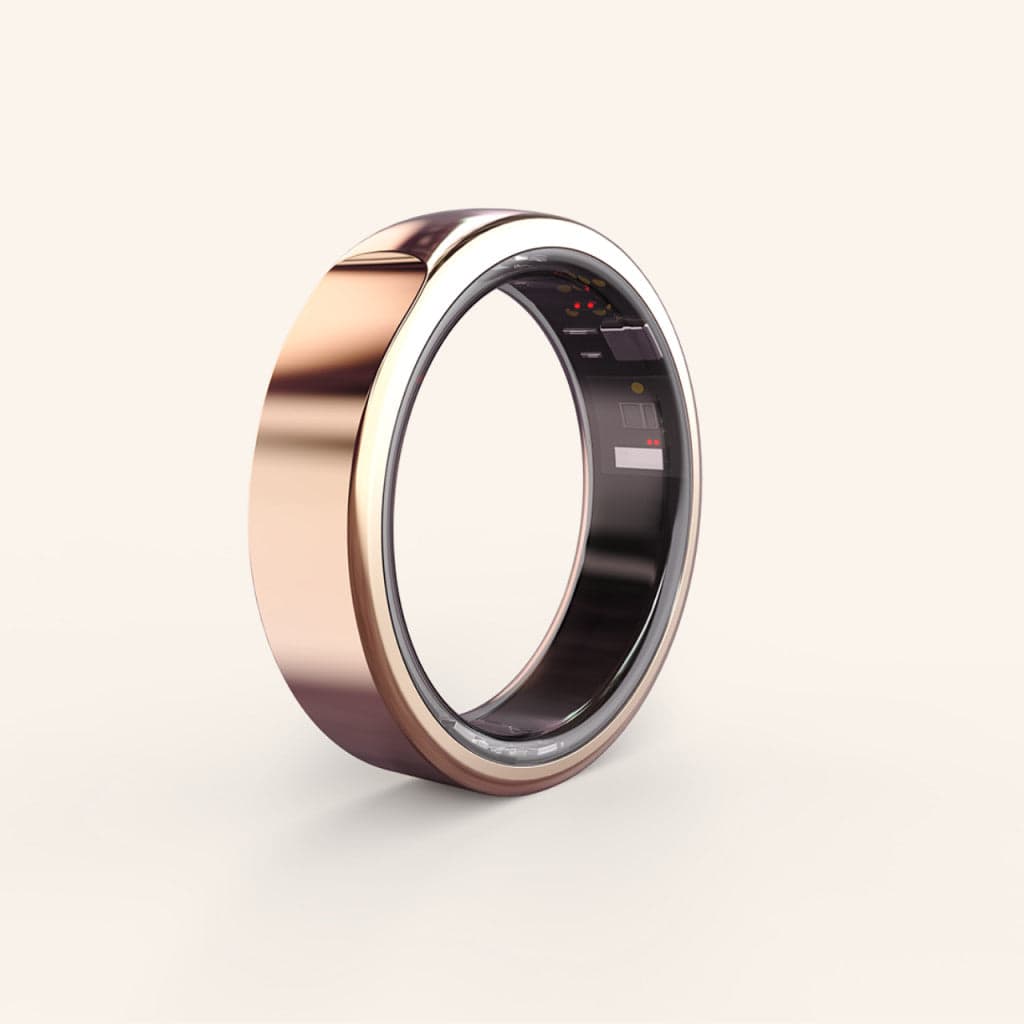
The Omni Health Ring is the value-tier entrant in the smart-ring category. Aerospace-grade titanium build, 6.5mm × 2.4mm dimensions, 2-3 grams (depending on size). 5-7 day battery on a single charge, plus a charging case that holds 2 full additional charges - total 15-21 days off-grid without needing a wall outlet.
The biometric stack covers what most longevity buyers actually want: red + infrared LEDs for blood oxygen tracking, HR + HRV + respiration during the day, and the standard sleep-stage decomposition (deep, REM, awake, sleep efficiency). The proprietary "Health Agent" analyzes 20+ biomarkers and delivers personalized guidance - and crucially, the core ring is fully usable without paying any subscription. The optional "Super Mini" AI pass adds advanced insights but isn't required.
The positioning vs the established competition: - Oura Ring Gen 4 ($349-499 + $5.99/mo subscription): better historical-data depth and longer-running brand. Costs ~$500/yr to operate fully. - Ultrahuman Ring AIR ($349-449, no subscription): closest direct competitor at the no-subscription tier. Slightly more refined app, similar metrics. - WHOOP 5.0 ($239/yr membership): wrist-worn, strain-coaching focus, fundamentally different form factor. - Omni Health Ring ($199, no subscription): cheapest credible smart ring with comparable biometric coverage. ~$300 less than Oura over year 1, ~$500 less over year 3.
Where it gives ground: the brand is newer (no 5+ year track record). The app and dashboard are improving but don't yet match Oura's polish. Historical-data depth is shorter - if you've worn an Oura for 3 years, switching loses the longitudinal trend data. Independent third-party validation of the biometric accuracy is still emerging.
Where Omni wins specifically: the brand has shipped a real product with real buyer demand at a meaningful sub-Oura price point. This isn't a Kickstarter that disappeared after delivery or a knockoff that copies the Oura form factor without the engineering. For first-time smart-ring buyers who want the no-subscription bet without paying $349-449 for Ultrahuman, Omni is the sharpest value entry in the category.
First-time smart-ring buyers wanting the credible biometric coverage at the no-subscription, sub-$200 tier. Especially good for buyers who specifically don't want recurring fees, travelers who value the 15-21 day off-grid battery, and value-conscious longevity buyers building a foundational stack.
You want the longest-running brand pedigree and richest historical dataset (Oura Gen 4), the most polished no-subscription competitor (Ultrahuman Ring AIR), or wrist-form-factor strain coaching (WHOOP).
Specifications
Most often compared with
Featured in these curated stacks
We’ve included this product in 1 editorial bundle - groupings of 4-7 items that work as a system.
Where this fits
Omni Health Omni Health Ring cross-shops across several editorial surfaces on this site: the full brand catalog, the price band it qualifies for and the in-depth guides for its category.
Omni Health Omni Health Ring - buyer FAQ
Does the Omni Health Ring require a subscription?
No - core ring features (sleep tracking, HRV, SpO2, HR, biomarker dashboard) work without any subscription. The optional "Super Mini" AI pass adds advanced personalized insights and comes with a free one-month trial. This is the meaningful differentiator vs Oura Ring, which gates most insights behind a $5.99/mo or $69.99/yr Membership.
How does Omni Health Ring compare to Oura Ring Gen 4?
Same form factor (smart ring), similar biometric coverage. Oura wins on brand pedigree (5+ year track record), historical-data depth, and app refinement. Omni wins on price ($199 vs $349-499) and zero recurring cost. Over 3 years, Omni saves ~$500 vs Oura. For first-time smart-ring buyers, Omni is the value pick. For buyers already deep in the Oura ecosystem with years of historical data, the switch cost is real.
What is the battery life on the Omni Health Ring?
5-7 days on the ring itself per full charge. The included charging case holds enough power for 2 additional ring charges, giving 15-21 days of total off-grid use without needing a wall outlet. This is meaningfully better than wrist-worn options (Apple Watch ~24 hours, WHOOP ~5 days) and on par with Oura.
How accurate is the Omni Health Ring for sleep tracking?
Omni's sleep-tracking architecture uses red + infrared LEDs (same as Oura) for blood-oxygen and HR-based sleep-stage detection. Accuracy claims by manufacturer track the consumer-grade-ring category at large. Independent third-party validation is still emerging - for buyers who specifically need polysomnography-grade accuracy, no consumer ring meets that bar; Omni and Oura are both directionally accurate for trend tracking, which is what matters for most longevity protocols.
Can I use Omni Health Ring with iPhone and Android?
Yes - the Omni app is available on both iOS and Android. The ring itself is platform-agnostic and uses Bluetooth Low Energy for sync. No HealthKit / Google Fit integration as deep as Oura's today, but the dashboard and metrics are platform-equivalent.
Omni Health Ring - 20+ Biomarker Smart Ring at Sub-$200
$199 · Verified 2026-08-14
Shop Omni Health →