Lifespan Vault earns an affiliate commission when you buy through links on this page, at no extra cost to you. It does not change our rankings or our verdicts. As an Amazon Associate, Lifespan Vault earns from qualifying purchases.
Amazfit is the wearables brand of Zepp Health, and it occupies a specific slot in the longevity gear market: budget-to-midrange hardware, titanium where rivals reach for plastic, and no subscription attached to any of it. Two Amazfit products sit in our catalog. The Amazfit Helio Ring is a titanium smart ring at $149.99, verified 2026-08-14, and the Amazfit Balance Ultra is a Grade 5 titanium sport watch at $599.99, verified 2026-08-14. Everything we track from the brand lives on the Amazfit brand hub.
Here is the direct answer before the detail. Buy the Helio Ring if you want to find out whether ring-based sleep and HRV tracking sticks as a daily habit before spending Oura or Ultrahuman money, because $149.99 once is the cheapest credible entry we cover, with no membership behind it. Buy the Balance Ultra if you want a 10 ATM titanium watch with multi-week battery ratings and dual-band positioning across six satellite systems, and you are content keeping your long-term data inside the Zepp app. Skip both if you want the longest peer-reviewed validation record behind your sleep numbers, which belongs to Oura, or if you need ECG on the spec sheet, because ECG does not appear anywhere on the Balance Ultra product page.
Quick answer
- Ring-curious buyer testing a habit: the Amazfit Helio Ring at $149.99, verified 2026-08-14, the lowest-priced titanium tracking ring we cover with no membership to renew.
- Hybrid athlete who hates charging: the Amazfit Balance Ultra at $599.99, verified 2026-08-14, Grade 5 titanium with a 780 mAh battery Amazfit rates at up to 30 days of typical use.
- Buyer who wants the most-validated ring data instead: the Oura Ring Gen 4 at $349 to $499, verified 2026-05-29, accepting the $5.99 a month or $69.99 a year membership that unlocks it.

Amazfit and the field at a glance
| Device | Verified price | Price verified | Subscription | Battery, brand rating |
|---|---|---|---|---|
| Amazfit Helio Ring | $149.99 | 2026-08-14 | None | Not in our verified data |
| Amazfit Balance Ultra | $599.99 | 2026-08-14 | None listed | Up to 30 days typical, 10 days always-on |
| Oura Ring Gen 4 | $349 to $499 | 2026-05-29 | $5.99/mo or $69.99/yr | 8 days |
| Ultrahuman Ring Pro | $479 | 2026-07-28 | None | 15 days |
| Omni Health Ring | $199 | 2026-08-14 | None for core features | 5 to 7 days, 15 to 21 with case |
| Suunto Race 2 | $499 | 2026-08-14 | None | Up to 30 days daily use, 55 h GPS |
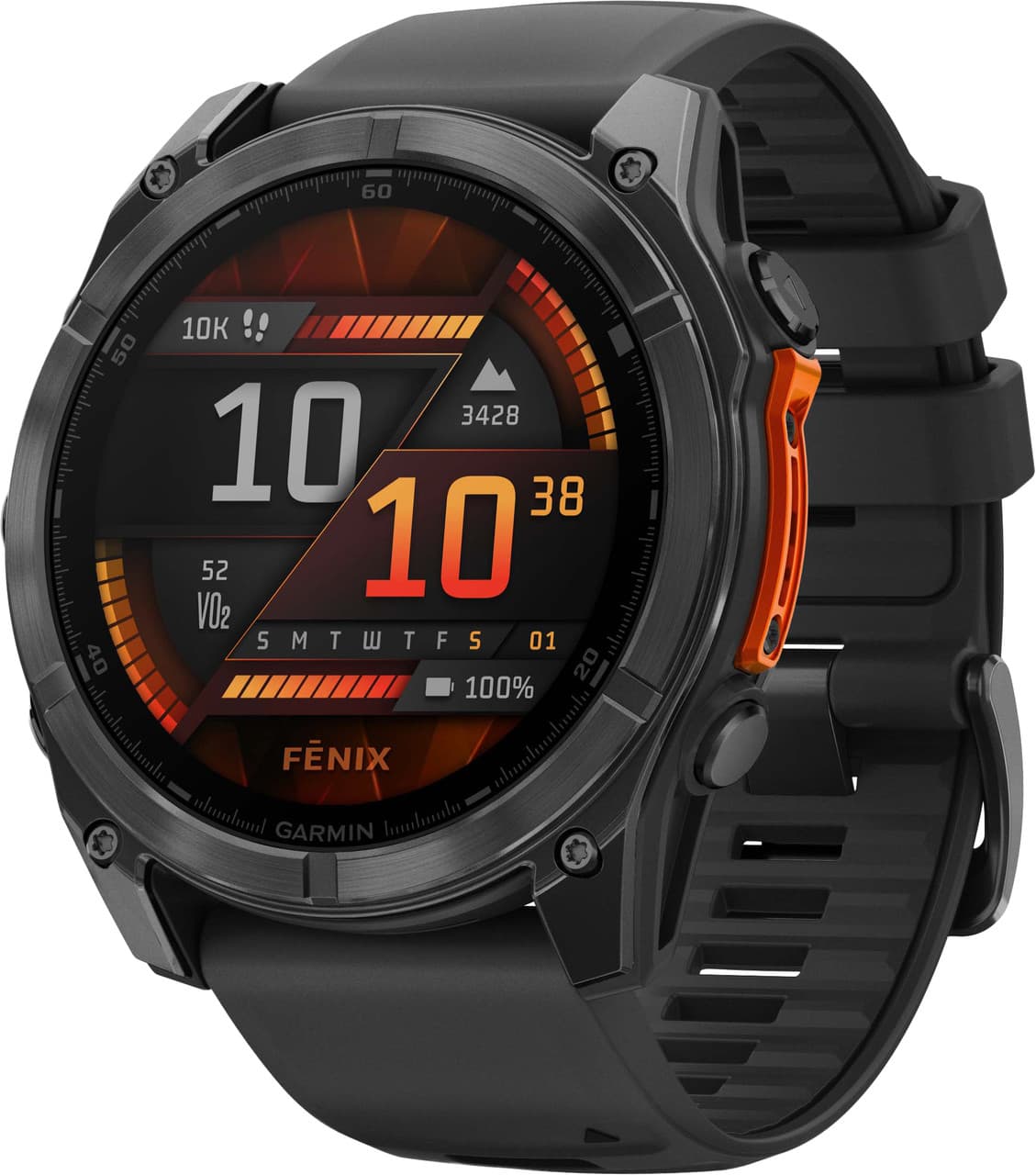
| Garmin Fenix 8 | $999 to $1,199 | 2026-07-09 | None | 14 days, smartwatch mode |
Who Amazfit is
Our catalog records the brand as Amazfit (Zepp Health), which is the single most useful fact about it. At $149.99 the smart ring shelf fills with sellers nobody can name, and buyers cannot tell a real manufacturer from a rebadged import. Amazfit is not in that group: a shipping wearables business with a full watch line, reaching down into a category Oura defined.
What the brand does not have is what Oura spent a decade buying, a peer-reviewed validation record and a multi-year per-user dataset. Details past the product pages, including headcount and funding, are not in our verified data, so judge Amazfit on shipped hardware, published specs and price. On those three it is consistent: both catalog products are titanium, both undercut the obvious rival, and neither one bills you monthly.
The Amazfit thesis in one line is pay once, own the hardware, accept a younger app. Whether that trade is good depends on which of the two products you are looking at.
The Helio Ring, spec by spec
The Amazfit Helio Ring is a titanium smart ring at $149.99, verified 2026-08-14 across all variants. It tracks sleep stages, heart-rate variability, resting heart rate and readiness, the core four that make a ring worth wearing, with no subscription of any kind, so $149.99 is the entire cost of ownership.
Be clear about what is not on that list. Battery life, water resistance, size range, weight and warranty terms for the Helio Ring are not in our verified data, and we will not guess at them. That gap matters more on a ring than on most gear, because a ring you have to charge every three days is a ring you stop wearing. Ask for the battery rating and the return window in writing before you buy.
The comparison the Helio Ring is built to win is the first-purchase one. Against the Oura Ring Gen 4 at $349 to $499, verified 2026-05-29, plus $69.99 a year, three years of ownership runs $558.97 at the base ring price. The Helio Ring over the same three years is $149.99, a $408.98 difference, the price of the ring nearly three more times over.
Where the Helio Ring gives ground
- The app and metrics library are younger and narrower than Oura's, so the depth of analysis behind each score is thinner.
- The third-party integration set is smaller, which matters if you want your ring data flowing into other tools automatically.
- Battery, water resistance, sizing, and warranty are not in our verified data, so the spec sheet has real holes at this price.
- No published validation record of the kind Oura carries, so read the trends rather than any single night.
The Balance Ultra, spec by spec
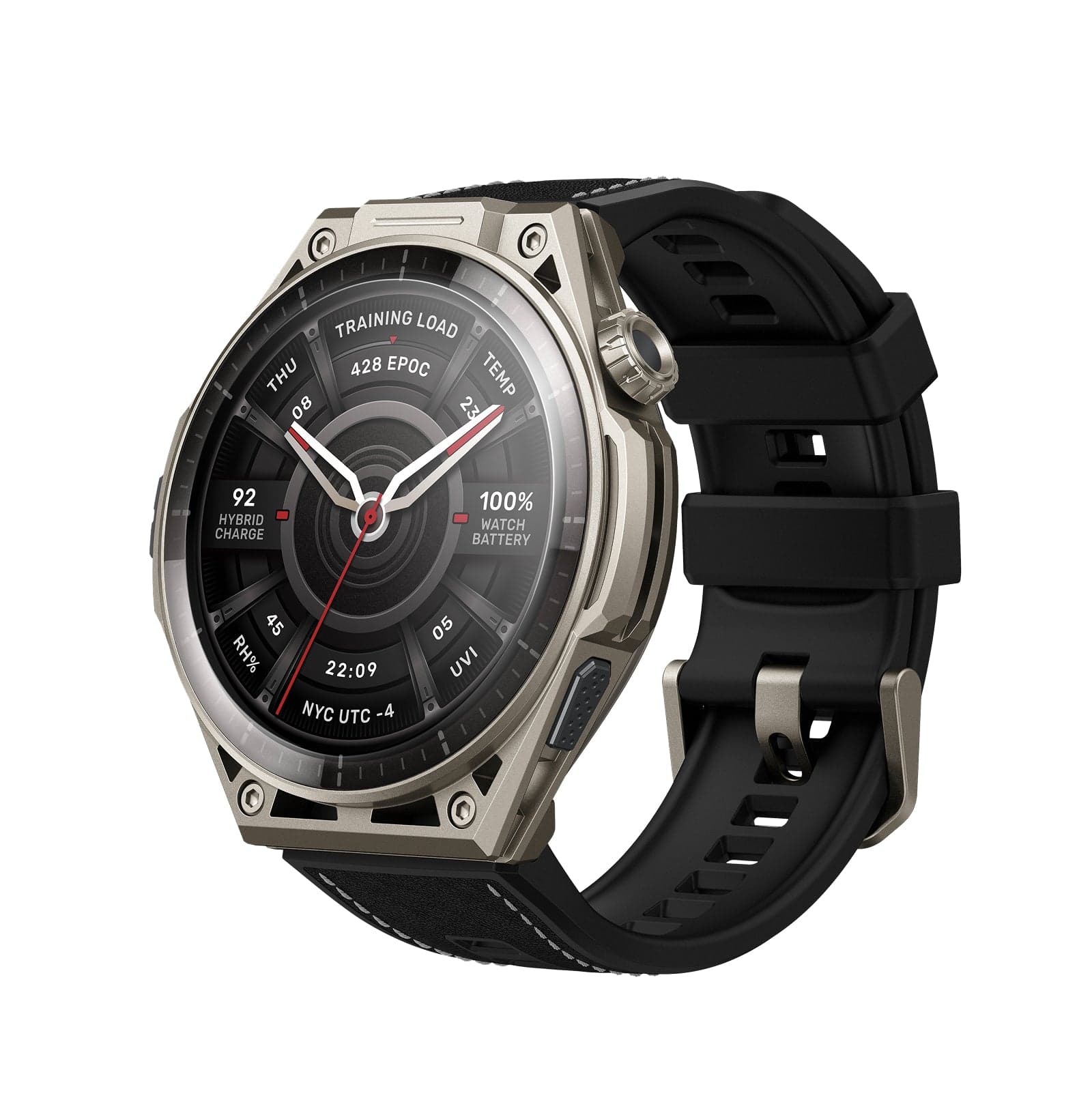
The Amazfit Balance Ultra is the top model in the Balance line at $599.99, verified 2026-08-14. The bezel, frame, buttons, and back cover are Grade 5 titanium over a fiber-reinforced polymer case, with sapphire glass covering a 1.5 inch AMOLED display at 480 x 480 and 323 ppi, rated up to 3,000 nits peak. It measures 51.8 x 51.8 mm, is 15.5 mm thick with the sensor module and 13.4 mm without, and weighs 57 g before the strap.
The battery is 780 mAh, and Amazfit rates it at up to 30 days of typical use, 15 days of heavy use, and 10 days with the always-on display enabled, plus up to 50 hours in GPS accuracy mode and up to 97 hours in GPS power saving mode. Those are the brand's own up-to figures. Water resistance is 10 ATM, listed for 45 meter freediving and recreational scuba, with the dive claim referencing EN13319:2000, ISO 22810:2010 and GB/T30106-2013.
Sensors are the BioTracker 6.0 PPG stack with 5 photodiodes and 2 LEDs, alongside acceleration, gyroscope, ambient light, geomagnetic, temperature, and barometric altimeter sensors. Positioning is dual-band with a circularly polarized antenna across six satellite systems: GPS, GLONASS, Galileo, BeiDou, QZSS and NavIC. Connectivity is Bluetooth LE 5.2 plus 2.4 GHz Wi-Fi with 64 GB of storage, running Zepp OS 6 and requiring Android 8.0 or later, or iOS 17.0 or later. The feature list adds 180-plus workout modes, HYROX Race and Simulation modes, base maps with turn-by-turn directions and route planning, golf course and ski resort maps, a red and white flashlight, and a mic and speaker for calls. The box holds the watch, two straps on a 22 mm quick-release fitting, a magnetic charging head and a manual, with a 1 year standard warranty.
Where the Balance Ultra gives ground
- ECG does not appear anywhere on the product page. The published sensor stack is PPG-based, so if a wrist ECG is on your requirement list, this watch does not meet it.
- You are committing to the Zepp app, which is where all long-term health and training data lives, rather than a broader third-party ecosystem.
- Zepp Flow voice control is noted as supported in select countries and regions only.
- Inside Amazfit's own lineup the $299.99 Balance 2 shares the 1.5 inch sapphire AMOLED at a 21-day typical rating, so the Ultra's extra $300 buys titanium, the bigger battery, dual-band positioning and HYROX modes, not a different health feature set.
The subscription question, priced honestly
This is the real reason to read an Amazfit page, so here is the arithmetic. Over three years of ownership, the Helio Ring costs $149.99 and never asks again. The Oura Ring Gen 4 at its $349 base plus $69.99 a year comes to $558.97. The Ultrahuman Ring Pro has no membership either, so its three-year cost is its purchase price, $479, verified 2026-09-20. The Omni Health Ring is $199, verified 2026-08-14, with core features free and an optional AI pass.
Ranked by three-year outlay, that is Helio at $149.99, Omni at $199, Ultrahuman at $479, and Oura at $558.97. The Helio Ring wins that column by $49.01 over the Omni and by $408.98 over the Oura path. Going up the ladder buys validation depth, app maturity, longer battery ratings and a longer track record, not a different set of core metrics. We ran the wider version of this math in the no-subscription smart ring comparison.
Alternative 1: Ultrahuman Ring Pro, the no-subscription upgrade
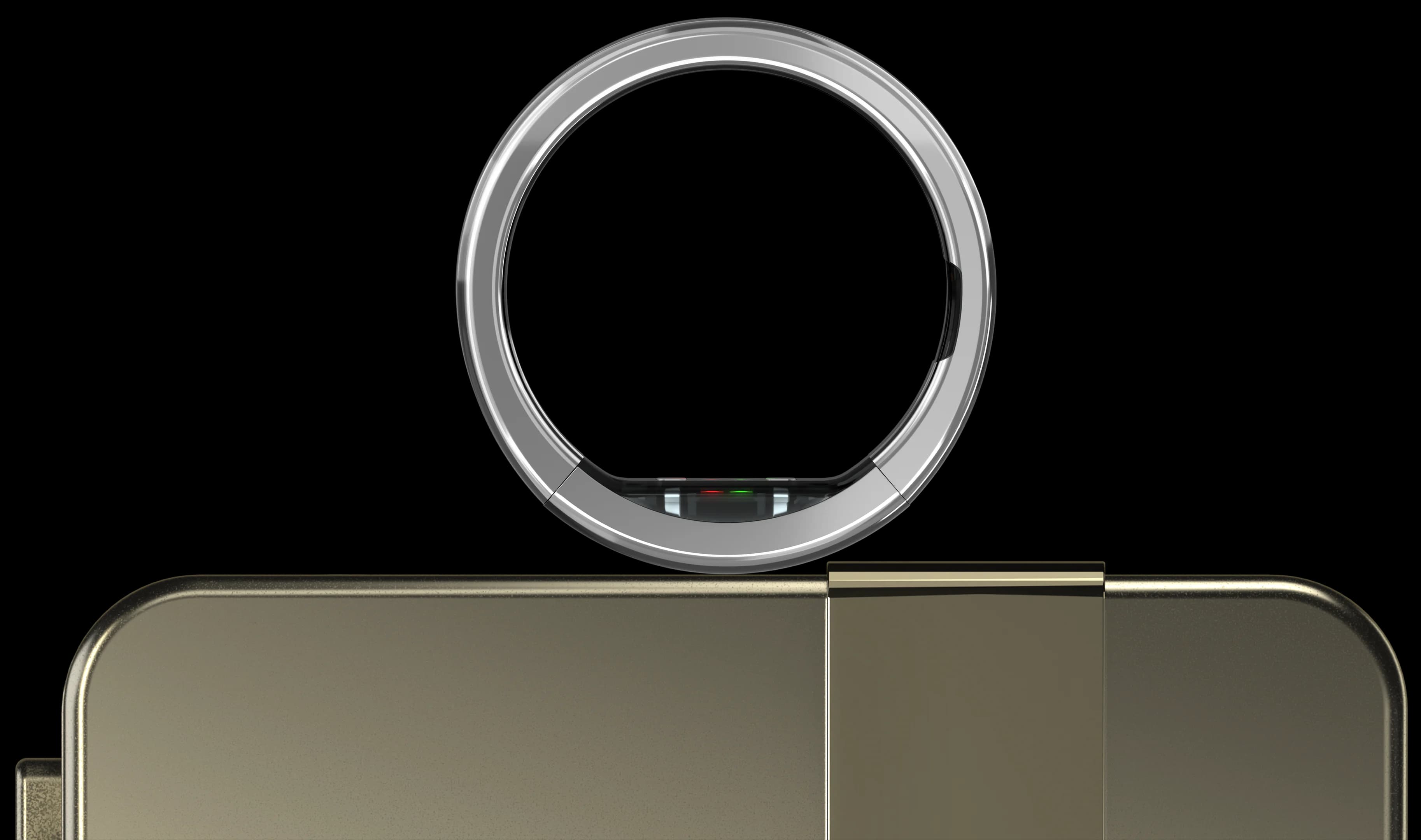
The Ultrahuman Ring Pro is what the Helio Ring aspires to at roughly triple the price: titanium, sleep stages, HRV, temperature and recovery, a 15-day battery rating, and a one-time purchase with lifelong app and data access. Pricing is $479, verified 2026-09-20, and code LifespanVault takes 10 percent off at checkout. It is the ring to buy if the no-subscription principle matters to you but the Helio Ring's thin spec sheet does not sit right.
Where it gives ground: a shorter peer-reviewed validation record than Oura and less per-user history, and the earlier Ring AIR was blocked from US import after Oura won an ITC patent case, with the redesigned Ring Pro shipping from June 2026. Our full take is in the Ultrahuman Ring Pro review.
Alternative 2: Omni Health Ring, the $49 step up
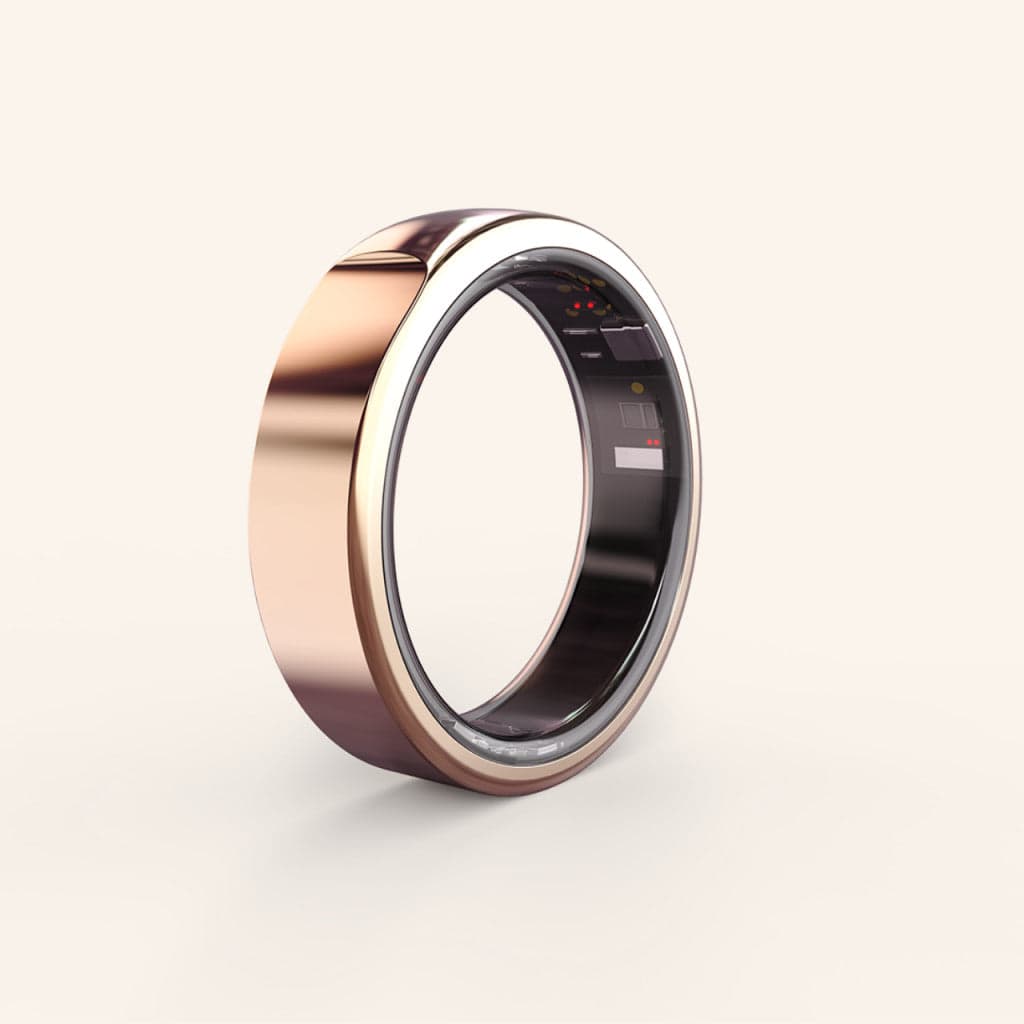
The Omni Health Ring sits one rung above the Helio at $199, verified 2026-08-14, and it fills in exactly the gaps the Helio spec sheet leaves open. Aerospace-grade titanium, 6.5 mm wide by 2.4 mm thick, 2 to 3 grams, a 5 to 7 day battery on the ring with a case that adds two more full charges for 15 to 21 days off-grid, red and infrared LEDs for blood oxygen, and a dashboard covering 20-plus biomarkers. Core features need no subscription; an optional AI pass adds more.
Where it gives ground: the brand is newer with no five-year track record, the app is less polished than Oura's, and independent third-party validation of its accuracy is still emerging. For $49.01 more than the Helio Ring you get a published battery figure and a charging case, which is the single clearest upgrade on this page.
Alternative 3: Oura Ring Gen 4, the validated default
The Oura Ring Gen 4 is the reason the other three rings have to justify themselves: the deepest peer-reviewed validation of any consumer sleep tracker, including independent studies against polysomnography, an 8-day battery, titanium in sizes 6 to 13, and the most mature app in the category, at $349 to $499, verified 2026-05-29.
Where it gives ground: the full insight layer is gated behind a membership at $5.99 a month or $69.99 a year, so the ring alone shows raw scores while the analysis that makes them useful sits behind a recurring bill. There is no glucose tracking and no wrist screen. If the membership is the sticking point, our Oura Ring alternatives roundup lines up every escape route including this one.
On the watch side: Suunto Race 2 and Garmin Fenix 8
The Balance Ultra competes in a different aisle. The closest catalog rival on price is the Suunto Race 2 at $499, verified 2026-08-14: a 1.5-inch AMOLED with dual-band GPS and offline maps, 115-plus sport modes, sapphire crystal over a stainless steel bezel at 76 g, up to 55 hours of GPS training battery and up to 30 days in daily use, 300-plus partner apps including Strava, and no subscription. Where it gives ground against the Balance Ultra: stainless steel rather than Grade 5 titanium, and no equivalent to the 64 GB of onboard storage or the HYROX modes.
Above both sits the Garmin Fenix 8 at $999 to $1,199, verified 2026-07-09, with 100-plus sport profiles, training-load analytics, multi-band GPS and a 14-day smartwatch-mode battery. Where it gives ground: it costs $399.01 to $599.01 more than the Balance Ultra, and its sleep tracking is not the equal of a dedicated ring. Our longevity wearables buyers guide settles the watch versus ring question first.
Verdicts by buyer type
- The first-time ring buyer running a habit test: the Amazfit Helio Ring at $149.99. Nothing else we cover puts titanium and the core four metrics on your finger for less, and a failed habit costs $149.99 instead of $558.97.
- The buyer who wants a published battery number: the Omni Health Ring at $199, where $49.01 more buys a 5 to 7 day rating and a charging case worth 15 to 21 days off-grid.
- The subscription-averse buyer who wants the better ring: the Ultrahuman Ring Pro at $479, a 15-day battery and lifelong data access with no membership, ever.
- The data purist: the Oura Ring Gen 4 at $349 to $499 plus $69.99 a year. Pay for the validation record and the app maturity, and stop shopping.
- The hybrid or endurance athlete: the Amazfit Balance Ultra at $599.99 if titanium, 10 ATM and the up to 30 day rating are the priorities, or the Suunto Race 2 at $499 if a lighter 76 g watch and a deeper partner-app ecosystem matter more.
- Anyone who needs ECG on the wrist: neither Amazfit. ECG is not on the Balance Ultra product page, and titanium does not substitute for an absent feature.
Bottom line
Amazfit is the value floor of the wearables category held up by a real manufacturer, and that combination is rarer than the price suggests. The Helio Ring at $149.99 and the Balance Ultra at $599.99, both verified 2026-08-14, ask for nothing after the sale, which over three years puts the ring $408.98 under the Oura path and makes the watch a one-time purchase in a market full of recurring ones. The honest cost is spec-sheet depth: the Helio Ring's battery, water resistance and warranty are not in our verified data, and the Balance Ultra has no ECG and locks your history into the Zepp app. Start with the ring if you are testing whether the habit sticks, step up to the Ultrahuman Ring Pro or Oura Gen 4 once it has, and read the Best Longevity Wearables 2026 guide before you spend watch money.
Is the Amazfit Helio Ring a real alternative to Oura, or a toy?
It is a real alternative at the entry tier. The Helio Ring is titanium and tracks sleep stages, HRV, resting heart rate, and readiness for $149.99, verified 2026-08-14, with no membership. What you give up versus the $349 to $499 Oura Ring Gen 4 is a younger app, a narrower metrics library, and a smaller set of third-party integrations.
Does Amazfit charge a subscription for the Helio Ring or the Balance Ultra?
No. The Helio Ring carries no monthly fee at $149.99, verified 2026-08-14. No subscription is listed on the Balance Ultra product page either, and Amazfit lists the Zepp app as free. Compare that with the Oura Ring Gen 4, where full insights sit behind a membership at $5.99 a month or $69.99 a year on top of the ring.
How long does the Amazfit Balance Ultra battery really last?
Amazfit rates the 780 mAh battery at up to 30 days of typical use, 15 days of heavy use, and 10 days with the always-on display on. With GPS running, the listed figures are up to 50 hours in accuracy mode and 97 hours in power saving mode. Those are the up-to ratings Amazfit publishes, so an always-on display and frequent GPS work pull results lower.
Should I buy the $599.99 Balance Ultra or the $499 Suunto Race 2?
Take the Balance Ultra for the Grade 5 titanium build, 10 ATM rating with 45 meter freediving listed, 64 GB of storage, and the up to 30 day typical battery rating. Take the Suunto Race 2 at $499, verified 2026-08-14, if you want a lighter 76 g watch, 115-plus sport modes, and 300-plus partner apps including Strava. The gap is $100.99.
Who actually makes Amazfit, and is the brand credible?
Amazfit is the wearables brand of Zepp Health, recorded in our catalog as Amazfit (Zepp Health). This is an established wearables maker shipping at scale, not a crowdfunding page, which is a meaningful distinction at the $149.99 price point where unknown sellers cluster. Company details beyond that, such as headcount and funding, are not in our verified data.
The products this post references

The Longevity Gear Buyer's Checklist
The specs that actually decide whether a sauna, cold plunge, red light panel, or smart ring is worth it, plus the real price range for each. Get the free PDF, plus one weekly email on the gear worth buying.